
By SHANNON DININNY
The Associated Press
YAKIMA, Wash. — Irrigation canals line Washington’s Yakima Valley east of the Cascade Range, transforming a desert landscape into one of the most productive agricultural regions in the world — including crops for some of America’s biggest vices.
Thousands of acres of wine grapes dot the landscape, contributing to Washington’s No. 2 rank for premium wine production behind California.
Farmers grow more than two-thirds of U.S. hops for big beer companies and craft brewers alike, and a large tobacco field is flourishing on a valley Indian reservation.
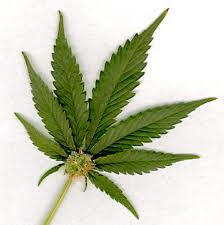
Now that Washington voters have legalized marijuana, will a region long recognized as one of the country’s leading fruit bowls, best celebrated for Washington apples, become known as the vice belt?
Not necessarily.
Too many unanswered questions remain about the new law, from how the state will regulate it to whether entrepreneurs or large corporations should lead the way. And the biggest question: the federal government’s role going forward.
Marijuana remains illegal under federal law. Many states have approved it for medical use, but only Washington and Colorado have legalized it for recreational use.
The Justice Department has not said whether it will try to block the two states from implementing their new laws, passed late last year. For that reason, key land-grant universities that typically aid the agriculture industry by researching such things as pest control and crop yields — but rely on federal funding to do so — are avoiding the marijuana industry altogether.
In addition, marijuana is a crop that can’t be insured, and federal drug law bars banks from knowingly serving the industry.
Any combination of those factors makes farmers leery of planting marijuana in the near term, said Bob Young, chief economist for the American Farm Bureau Federation.
“At this stage of the game, it poses tremendous problems for growers,” he said. “Quite frankly, I’d tell one of our members to approach this with great caution.”
Both states are in the process of developing rules for a legal marijuana industry.
In Washington state, a Liquor Control Board that privatized liquor sales statewide last year on orders of a different voter-approved initiative now is tasked with developing rules governing pot cultivation, processing and sales.
Of the three licenses the board will authorize — grower, processor, seller — the rules for producing marijuana raise the most complex issues, according to Randy Simmons, project manager for the Liquor Control Board.
How many farmers should be allowed to produce marijuana in order to meet demand, and how big should their crops be? Where should they get their seeds? Should a crop be grown indoors or in fields outside?
Dozens of marijuana experts, who have been growing plants for medical use or in secret for illegal use, are educating state officials about the potential for the crop. Probably 95 percent of those people choose to grow their plants indoors, despite higher costs, to control light and temperature, improve quality and increase yields, Simmons said.
Indoor crops generally allow for up to three harvests per season, compared to just one harvest for an outdoor crop, and allow for easier security measures.
As Simmons put it, “Somebody out picking a handful of grapes isn’t going to get stoned. So if we go through this process and determine outdoor grows are OK, we have to determine security standards.”
Security is a concern for Gail Besemer, who grows flowers and vegetables near Deming, Wash., and has expressed interest in a producers’ license.
Besemer already has three hoop houses, which are essentially temporary greenhouses, but could see expanding her business slightly to grow marijuana for a local clientele in northwest Washington.
However, “I’m concerned about druggies invading my property — ne’er-do-wells invading my property to steal, to get free dope,” she said. “Security would be an issue.”
Besemer, who is in her 60s, said she has never grown marijuana or used it, but can see potential for the crop.
“My family is not particularly excited about me being interested in this. But if someone has an integrated farm, growing a number of different crops, I would think it would be a high profit plant,” she said. “Taxation and security might get in the way of profits, and it might end not being so profitable.
“I’ll just have to wait and see about the regulations,” she said.
The Colorado Farm Bureau opposed the law there and says none of its members have expressed interest because they are unwilling to take the risk, according to Nicholas Colglazier, the group’s director of public policy.
Few traditional farmers, like Besemer, have expressed interest in Washington.
Simmons acknowledged that there are still many unanswered questions, but said answers will come with new state regulations this year. But he said he could envision an industry that allows for both boutique growers with higher quality marijuana and large outdoor growers to get a cheaper product on the market.
“You’re always going to see people looking for specific strains and varieties,” he said. “It’s like drinking Budweiser or a microbrew.”
