
PORT ANGELES — The news that Social Security payments will be frozen next year without cost-of-living adjustments was a blow to some North Olympic Peninsula seniors, while others shrugged it off.
One man told Robert Gray, Port Townsend city councilman, that because of increases in the cost of living, he will have to sell his house and move elsewhere, Gray said.
Barry Adams, 49, a disabled Army and Marine Corps veteran who retired after 22 years in 2004 and who now serves as commander of VFW Post 4760 of Sequim, said that for the most part, the lack of a Social Security cost-of-living increase “is not a major event.”
“The reality is, Social Security doesn’t pay a lot anyway, so $20 or $30 here or there isn’t going to affect us,” Adams said.
The freeze in Social Security payments is based on a federal government measure of inflation that was released Thursday.
It was heavily affected by a 90-cent drop in gasoline prices over the past year.
Thursday’s announcement frustrated seniors who said that while inflation may have stalled in terms of a nationwide average, the Peninsula is experiencing considerable inflation.
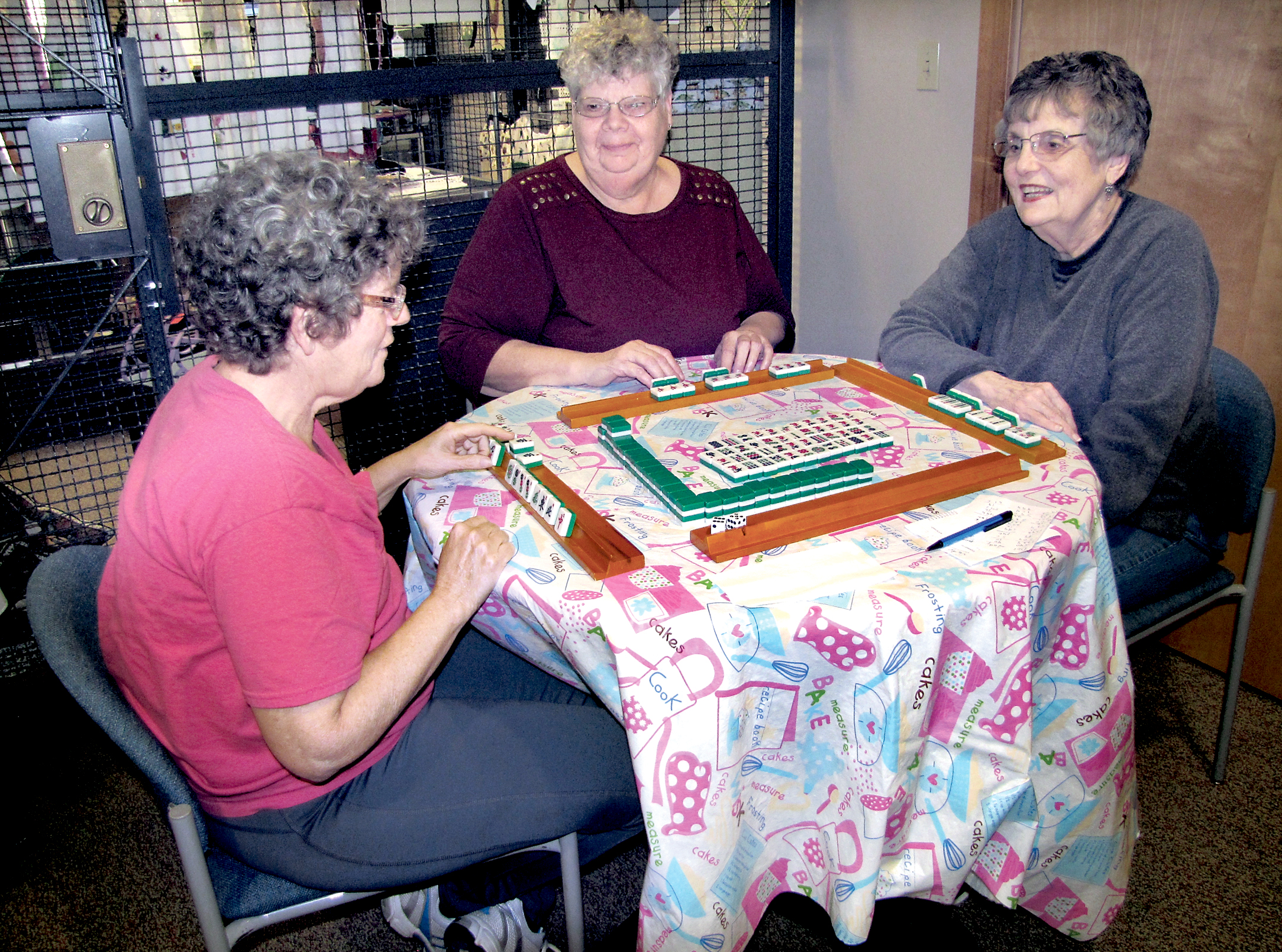
“They need to look at each area,” said Laura Olson, 67, of Port Angeles as she played mahjong at the Port Angeles Senior & Community Center on Thursday.
Various areas of the country have different levels of inflation, she said.
Some are becoming more expensive and some less, and it should be adjusted by the regional economy, she added.
“I’m already underinsured to start out. My first priority is food and housing, and I need insurance for my vehicle,” she said.
The annual cost-of-living adjustment, known as COLA, is based on the federal Consumer Price Index for Urban Wage Earners and Clerical Workers, referred to as CPI-W, which is a Bureau of Labor Statistics measure of consumer prices.
The lack of a COLA is expected to affect more than 70 million people nationwide — retirees, disabled workers, spouses and children — who receive an average of $1,224 each month in benefits.
It also will trigger an increase in Medicate deductibles and premiums for about 30 percent of Medicare beneficiaries, primarily higher-income recipients, new recipients and those who do not pay their premiums from their Social Security checks.
One Port Angeles retiree said Congress seemed concerned about the lowest-income workers but not retirees.
“How can they want to raise the minimum wage to $15 when there is not enough to cover insurance under Medicare?” asked Dot Halbach, 62.
There should have been enough money in the fund for annual increases to keep pace with the medical insurance costs, but Social Security funds have been diverted by Congress to other uses, Halbach said.
Judy Gleaton, 72, of Port Angeles said rising medical costs, insurance premiums and co-pays are a major part of the problem.
“Everything is going up except gas,” she said.
“Paying more for insurance means there is going to be less money for food.”
In Port Townsend, Gray said he has heard from several residents who are worried.
The city is doing what it can by not taking an annual 1 percent increase in property taxes that it is allowed by law, he said.
Gray said several programs offer discounts to seniors on utilities and low-interest loans for property tax payments.
Not all retirees on the Peninsula agree with those who are worried.
“I feel [past COLAs have been] very fair, and I think it will continue to be fair,” said Evelyn Wolf, 80, of Sequim.
Wolf said she and her husband have scrimped and saved over their lifetimes and use Social Security payments to supplement that income to improve their standard of living.
“We could not live off of Social Security alone,” she said. “No one should.
“Social Security was put in place to save people, and it did and it does,” she added.
“It was not supposed to ever be used for anything but the elderly, and it has been borrowed, used and all kinds of other things.”
Wolf said having a Social Security income adds to the little things she and her husband can do during retirement.
“We have seven children, we have 17 grandchildren and we’ve just had a great-grandchild, so we can’t send birthday presents anymore,” she said.
“But we do buy birthday cards, and it is just those type of things we would not be able to do if we did not have our 401K, and certainly if we did not have Social Security.”
Adams said Social Security recipients received a 1.7 percent COLA in January 2015.
“If we were getting, like, 25 percent a year and then it was cut off, that is an issue. But getting 1 [percent] or 2 percent? No,” he said.
“It is not like there is a sudden change of direction.”
Congress enacted automatic COLA increases for Social Security payments in 1975 during a time of high inflation and pressure to regularly raise benefits.
If prices measured during July, August and September increase from one year to the next, benefits increase, and if prices remain flat or drop, benefits are frozen.
Since 1975, increases have averaged about 4 percent per year, but the increases have slowed in the past decade.
According to the CPI-W, released Thursday, the index remained flat between 2014 and 2015, influenced by a 30 percent reduction in gasoline prices, a 5.9 percent drop in airline prices and a 1.3 percent drop in clothing prices.
They were offset by a 2.4 percent increase in housing prices, a 3.2 percent increase in housing costs and 1.6 percent increase in food prices.
________
Reporter Arwyn Rice can be reached at 360-452-2345, ext. 5070, or at arice@peninsuladailynews.com.
Sequim-Dungeness Valley Editor Chris McDaniel can be reached at 360-681-2390, ext. 5052, or cmcdaniel@peninsuladailynews.com.
The Associated Press contributed to this report.
