
PORT TOWNSEND — In wintertime, the northern lights stayed out all the time.
“They traveled around in different colors. They’d flash and wiggle,” recalled Casey Cassian, an Aleut born on the island of Unalaska.
He remembers too the summertime, with blueberries so abundant it was quick work to pick a 5-gallon bucketful. The berries grew low to the ground to stay out of the Aleutian wind; Cassian smiled at the memory, adding that as a boy, he was so slender that when it got windy, he too had to lie down on the earth to keep from blowing away.
Cassian lives in Port Townsend now. He is the youngest and only survivor of seven siblings, all of whom were orphaned young. This summer, as he watches sailboats and cruise ships head north, he’s remembering his Alaskan homeland — and a little-known part of American history.
In June 1942, when he was going on 5 years old, the Japanese navy invaded the Aleutians. U.S. troop deployments, bombings and the burning of villages followed, as did the relocation of native children.
The Aleutian chain was part of the U.S. territory of Alaska, much like Puerto Rico is today. Alaska didn’t become a state until 1959.
When the day came for evacuation from his island, “I had no say-so … For a little kid, that was kind of scary,” Cassian said.
“They just grabbed us” — all his siblings — “and put us on the boat,” a wooden vessel bound for southeast part of the territory.
Five of his siblings were taken to Sitka; Cassian and his brother Mike ended up at the Wrangell Institute, a boarding school run by the U.S. Bureau of Indian Affairs.
They lived in a dormitory, which they and the other boys cleaned each morning before class.
Cassian, industrious even then, learned how to earn money ironing: a nickel for a shirt, a dime for a pair of pants.
He also washed cars for two bucks. With those wages, he bought his own clothes.
Cassian doesn’t talk much about those years. But when a friend asks him gently about his time at Wrangell, he recalls teaching himself how to swim — in the Pacific Ocean.
Even if it was 1,200 miles north of Port Townsend, he and his classmates didn’t find the water too cold, at least on the sunny days.
In school, Cassian remembers that he excelled in math.
He’d solve the word problems as the rest of the class was just getting started; the instructor, astonished, would ask him how he’d done it.
He also did well in wood shop, carving a pair of bookends from yellow cedar.
These were totem animals, bears whose backs braced the books.
“One of the important people from Juneau came down. She bought them,” he recalled, for $2.50.
Upon graduating eighth grade, Cassian was moved to Sitka, where his brother Walter and sister Liz lived.
In high school there, he was befriended by Corinne Welfelt, a girl who would much later be a positive presence in his life.
When Cassian turned 18, his siblings told him they could no longer afford to feed him.
A military recruiter had come to town, so he joined the Navy and was told to be ready to travel that same week.
He remembers sailing to Bristol Bay and then San Diego, Calif., in a matter of days.
As a pipe fitter and damage control specialist, Cassian traveled around the globe, from California to Australia, Hawaii and China.
“If there’s one place I’d go back to,” he said, “it would be Hong Kong,” where a custom-tailored suit could be bought for a song.
Following his four years in the service, Cassian moved to Chicago. His brother Mike came with him, intending to go to welding school, but then announced he wanted to go back to Sitka.
Give it a month, Cassian suggested. I’ll go with you to the welding program.
It worked. Cassian, who had already learned to weld in the Navy, went to school alongside his brother. Both completed their courses and began new lives in Chicago.
Cassian got married while in the Midwest, but his wife died after just six years. Bereft, he returned to Sitka. Welfelt was there, and the two renewed their friendship — but then Welfelt moved to Port Townsend, a place she discovered suited her just fine.
“Come join me,” she said to Cassian. He did, and has been here for some 20 years now.
The two friends attended St. Herman of Alaska, Port Townsend’s Russian Orthodox church. Built in the woods off 30th Street, it’s named for the Russian-born monk who learned the Aleutian language and served the people on Kodiak and Spruce islands during the early 1800s.
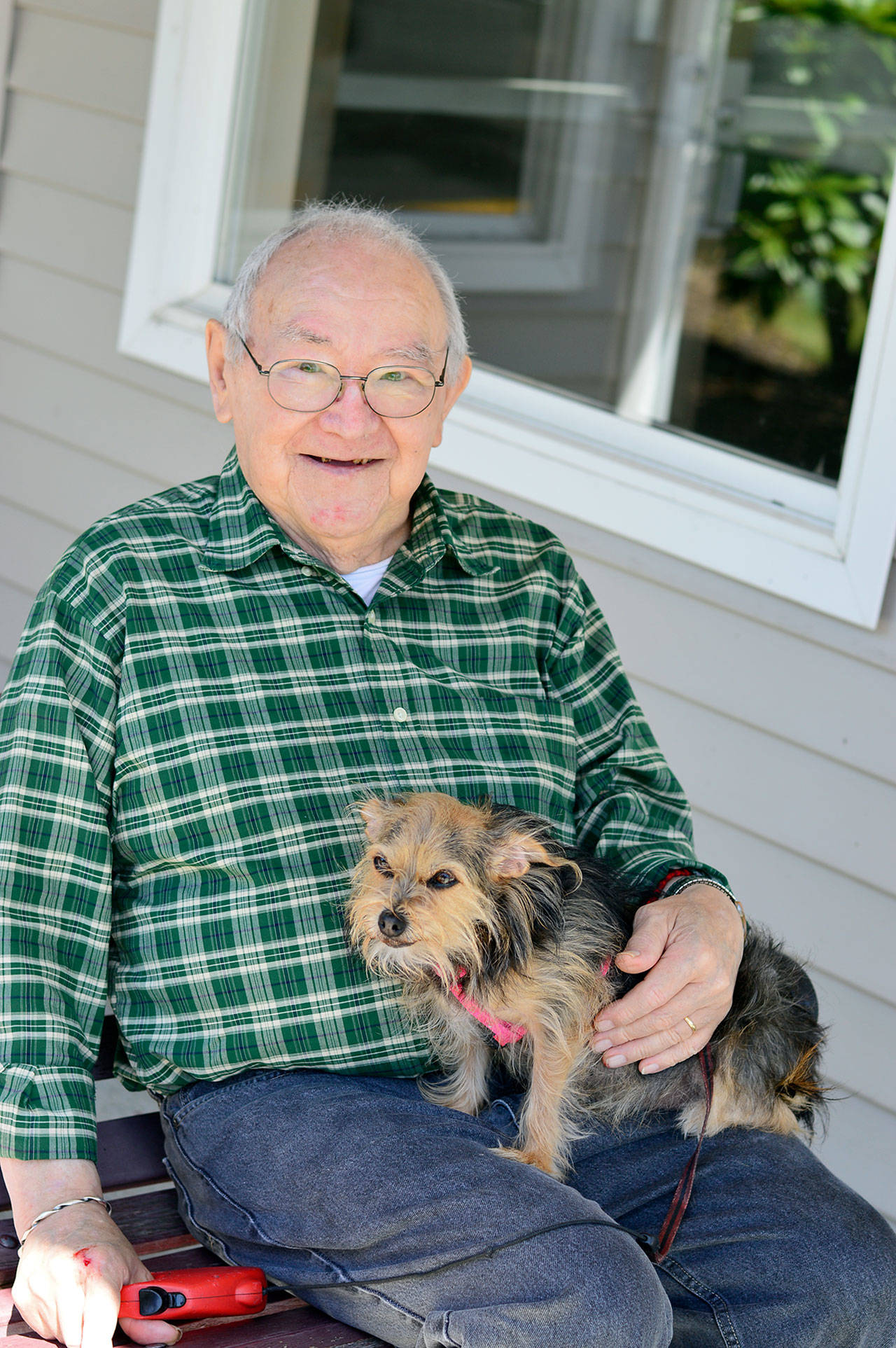
When Welfelt died in April 2018, Cassian became the caregiver for her dog, Cricket.
He still attends weekly Sunday services at St. Herman’s.
About five years ago, he flew back to his birthplace for the first time. On the land where his parents’ house had been, nothing is left.
Yet Cassian’s memories are vivid: how the men of Unalaska would go out to the Pribilof Islands to thin the seal herds and come back with boats full of harvested seals.
This sustained their families for months: meat, oil and hides provided protein, clothing and blankets.
“There was only one tree on Unalaska,” he recalled, so for firewood, families watched the ocean. When a log drifted in, they would drag it onto the shore to dry out, then chop it up for the elders of the village.
“That’s the Aleut way,” Cassian said. “Share what you have with anyone who needs it.”
He also remembers the air raids of his youth. The sirens sounded all too frequently, sending islanders into dugout bomb shelters.
“I wanted to go out and play,” he said with a wry smile.
These days Cassian enjoys going for walks with Cricket, spending time with his friend Isolde Perry, and playing pool in the recreation room at his apartment complex.
“Casey’s known there as a good pool player,” Perry said.
“They just haven’t seen a good pool player,” he said.
Last year he and two friends took a whale-watching trip out of Port Townsend, and was favored with a full breach by Scratchy, the well-known humpback whale. The sight reminded him of the beasts he once watched in Sitka.
As he looks forward to his 83rd birthday this year, he wouldn’t mind taking another trip: back up to Alaska on a ferry.
Cassian and Perry have had many conversations about his childhood.
“He is a man of strong spirit and deep faith,” she said, adding that he’s made wise choices over the years, choices that have provided him with the pension that sustains him now.
“He holds no grudge about being taken from his home,” when he was a boy, Perry said.
“That is a wonder to me.”
________
Diane Urbani de la Paz, a former features editor for the Peninsula Daily News, is a freelance writer living in Port Townsend.
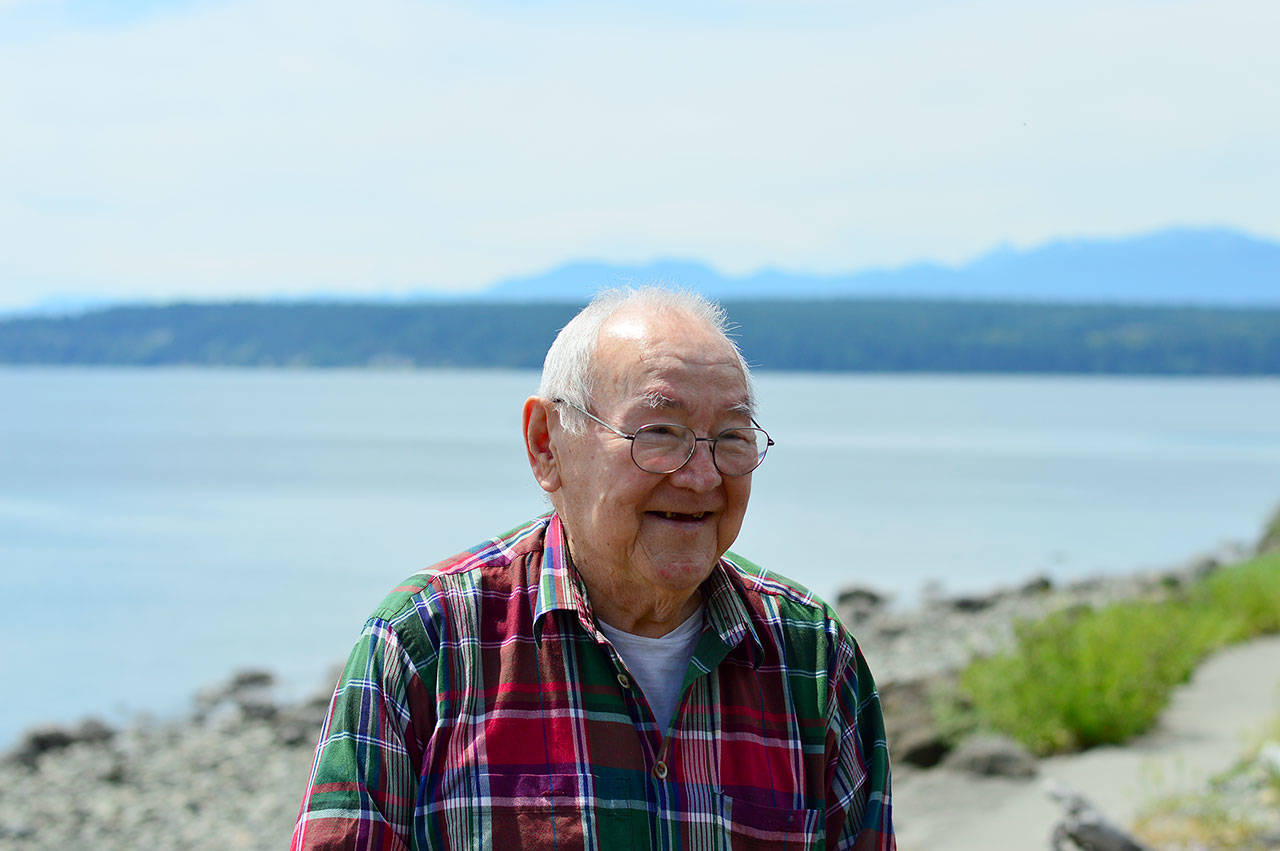
Casey Cassian, born just before World War II on the Aleutian island of Unalaska, lives in Port Townsend. (Diane Urbani de la Paz/for Peninsula Daily News)
