
By Keith Ridler
Associated Press
BOISE, Idaho — Federal scientists using new technologies have mapped what is being called a Cold Water Climate Shield, an area spanning five western states that could support viable populations of native species if the region continues its warming trend.
Mapping the cold-water refuges for cutthroat trout, a favored sport fish among anglers, and threatened bull trout could help resource managers make decisions aimed at preserving populations of those and other cold-water native species in Washington, Idaho, Oregon, Montana and Wyoming.
Streams warmer
Scientists said streams in the region have warmed up about a degree over the past three decades and are getting hotter.
“One of the things we’re seeing is that the colder areas are typically in the headwaters,” said Dan Isaak, a research fisheries biologist with the U.S. Forest Service in Boise.
“Those are warming up a lot more slowly than streams at lower elevations.”
The mapped area contains streams with temperatures preferred by cutthroat trout and bull trout but are too cold for non-native species, particularly brown trout and brook trout, thus forming the climate shield.
The climate shield has practical applications, Isaak said.
“Rather than spending money to build artificial barriers on streams to prevent the upstream advance of invasive species (which is very expensive and commonly done in some areas), the climate refugia streams we’re highlighting are so cold that you wouldn’t need to build a barrier to preserve the native community,” Isaak said in an email to The Associated Press.
Within this climate shield, scientists said some areas will remain capable of supporting bull trout even if the more extreme future climate models turn out accurate.
“It’s quite possible much of the habitat for bull trout will become too warm,” and it will disappear from those areas, said Mike Young, a research fisheries biologist for the U.S. Forest Service based in Missoula, Mont., also working on the climate shield.
“But we think that even under extreme climate scenarios bull trout will persist in the lower 48.”
Temperature sensors
Advances in stream temperature sensors and environmental DNA sampling, a new way to find out what species inhabit a stream, have provided a flood of information and allowed scientists to create the climate shield map.
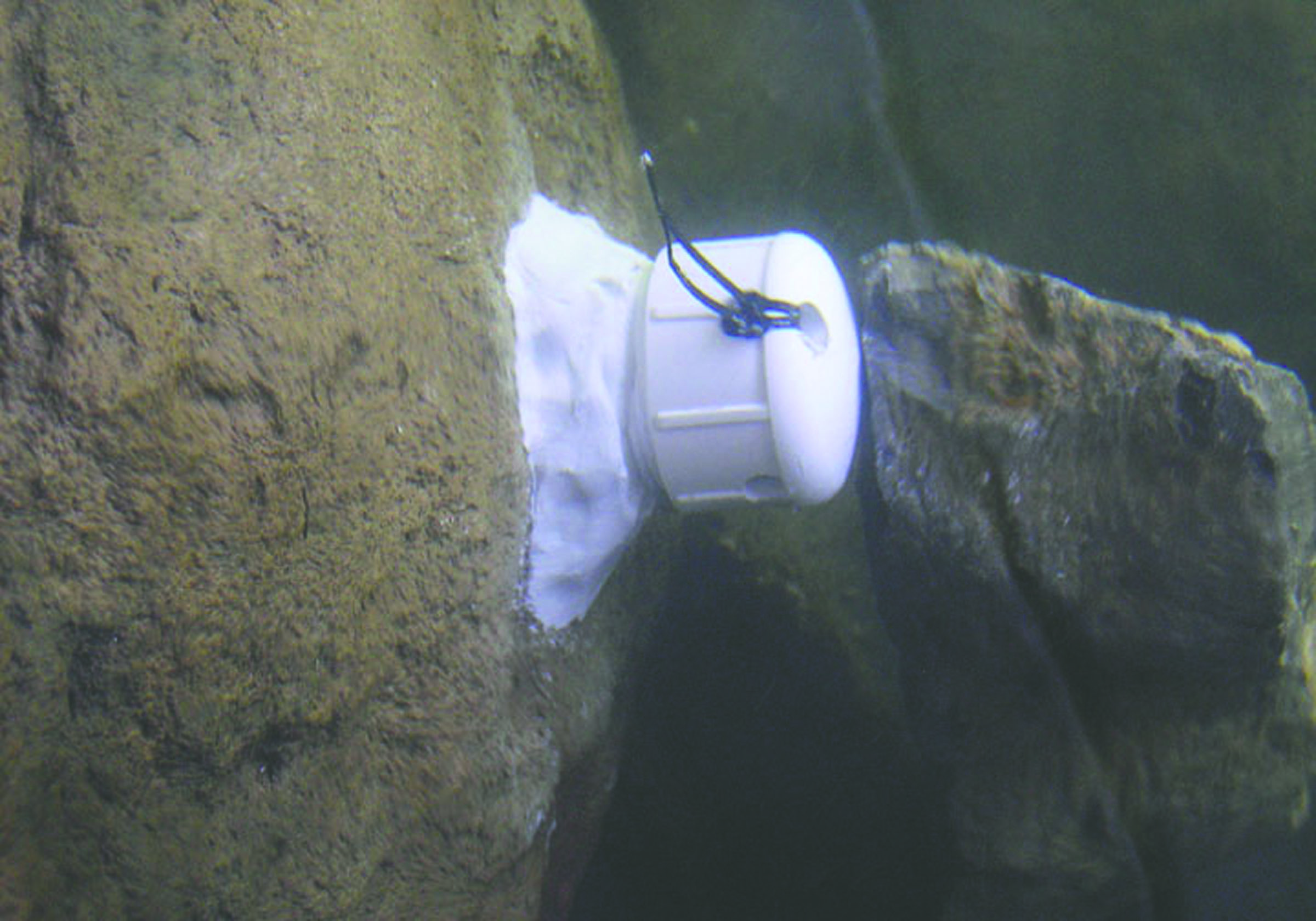
Temperature sensors are glued to underwater rocks and can store hourly temperature recordings for a year.
About 4,000 of the sensors are in streams in the five states.
Isaak said there are about 16,000 more unique sites recording information less frequently plus information going back even further.
In total, he said, scientists have about 50 million hourly temperature recordings.
The other part of the Cold Water Climate Shield involves environmental DNA sampling.
That began about eight years ago and has radically changed how scientists survey streams.
Rather than electroshocking stream sections and seeing what floats to the top, scientists can take a water sample and check it to see if a particular species is present.
“It’s not only better, but it costs less,” Young said.
“You can suddenly afford to go places and sample very broadly.”
The result is that entire river basins can be sampled, meaning streams that have never been sampled have now been analyzed or soon will be, Young said.
Decision making
That information could then be used for making decisions about where biologists should try to remove non-native brook trout, for example.
“Being able to make wise conservation investments is one of the most important things that we can do when protecting the biodiversity that we have,” Young said.
Isaak said the Cold Water Climate Shield idea is being taken up in other western states as well, but is mostly just getting started in those areas.
