
By ANDREW POLLACK Copyright 2015 New York Times News Service
WASHINGTON —
The first prescription drug to enhance women’s sexual drive won regulatory approval on Tuesday, clinching a victory for a lobbying campaign that had accused the Food and Drug Administration of gender bias for ignoring the sexual needs of women.
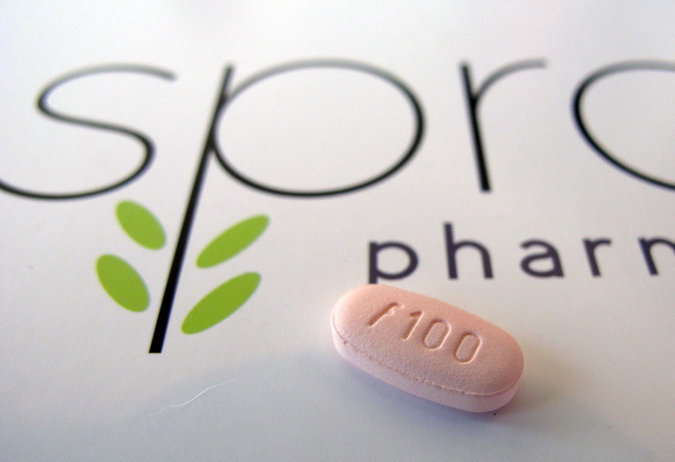
The drug — Addyi from Sprout Pharmaceuticals — is actually the first drug approved to treat a flagging or absent libido for either sex.
Viagra and other drugs available for men are approved to help achieve erections, or to treat certain deficiencies of the hormone testosterone, not to increase desire.
Advocates who pressed for approval of Addyi, many of them part of a coalition called Even the Score, said that a drug to improve women’s sex lives was long overdue, given the many options available to men.
“This is the biggest breakthrough for women’s sexual health since the pill,” said Sally Greenberg, executive director of the National Consumers League.
In announcing the approval, Dr. Janet Woodcock, a senior F.D.A. official, said the agency was “committed to supporting the development of safe and effective treatments for female sexual dysfunction.”
The F.D.A. decision on Tuesday was not a surprise since an advisory committee of outside experts had recommended by a vote of 18 to 6 in June that the drug be approved, albeit with precautions required to try to limit the risks and ensure that it was not overused.
Addyi’s label has a boxed warning — the strongest kind — saying the drug should not be used by those who drink alcohol, since that can increase the risk of severely low blood pressure and fainting. It is also not to be used with certain other drugs and by people with liver impairment.
The pill can be prescribed or dispensed only by doctors and pharmacists who watch an online slide presentation and pass a test of their comprehension. Women are advised to stop using the drug if they see no effect after eight weeks.
The big question now is how many people will use Addyi (pronounced ADD-ee), which is also known as flibanserin and has been called the “pink Viagra.”
According to one survey, about 10 percent of women suffer from hypoactive sexual desire disorder.
The F.D.A. said the drug was approved for women whose loss of sexual desire causes marked distress or interpersonal difficulty and is not the result of illness, relationship problems or side effects of other medicines.
Dr. Lauren Streicher, associate professor of clinical obstetrics and gynecology at Northwestern University, said she sensed great interest for a drug like Addyi among her patients. She said the drug’s availability would encourage many women to talk to doctors about their sexual problems for the first time.
“I think this is going to change the conversation that’s taking place in medical offices across the country,” she said, much as the 1998 approval of Viagra made it acceptable for men to talk about erectile dysfunction.
Leonore Tiefer, a sex therapist at the New York University School of Medicine and critic of the drug, predicted the restrictions on use would keep Addyi from becoming popular. “It’s going to be more trouble than it’s worth,” she said.
Cindy Whitehead, the chief executive of Sprout, declined to predict sales of Addyi, which she said would be available starting Oct. 17.
To allay concerns that the drug would be overused, Sprout has said it would not advertise on radio or television for 18 months after the drug’s approval. Ms. Whitehead said the company would focus its marketing on doctors, not consumers.
She said Sprout planned to hire 200 sales representatives, enough to call on about 30,000 doctors, mainly obstetricians and gynecologists but also some psychiatrists and primary care physicians.
She said the exact price of Addyi had not been decided, but suggested it would be roughly equivalent on a monthly basis to erectile dysfunction pills.
Those pills are generally taken when needed, while Addyi is supposed to be taken every night before bedtime. That makes a direct comparison difficult. But 10 Viagra tablets, a possible monthly allotment, cost about $400.
It is not clear if insurance companies will pay for Addyi.
Ms. Whitehead said that she expected many would, with a co-payment of about $30 to $75 a month. Sprout will assist patients with co-payments, she said.
Some doctors might use the drug beyond the uses in the label, which doctors are allowed to do.
Dr. Streicher said that although the drug was approved for premenopausal women only, she “absolutely” would prescribe it for postmenopausal women as well.
Dr. Irwin Goldstein, a sex-medicine doctor in San Diego who has been a consultant to Sprout, said he would not necessarily withhold the drug from casual drinkers.
Some women might find the risk of side effects acceptable if their relationships are in jeopardy because of a lack of desire, he said. “That’s a risk, too.”
Dr. Goldstein said he would also not rule out prescribing the drug off-label to men.
Ms. Whitehead said there was interest in learning whether the drug would work for men, but Sprout’s priorities would be to get it approved next for postmenopausal women and in foreign markets.
Addyi is thought to work by changing the balance of certain brain neurotransmitters like dopamine and serotonin.
There are disagreements among researchers as to what constitutes normal sexual desire in women. And there have been difficulties bringing to market a drug that would treat low desire.
Procter & Gamble failed to win approval for a testosterone skin patch for women about a decade ago. The F.D.A. rejected Addyi twice, in 2010 and 2013, citing marginal effectiveness and the side effects.
In one trial, for instance, women who took the drug had an average of 4.4 “satisfying sexual experiences” a month, compared with 3.7 for women getting a placebo and 2.7 before the study began.
The drug did not increase desire more than a placebo when measured by a daily diary, but did do so modestly when measured by a monthly questionnaire.
After the first rejection, Boehringer Ingelheim abandoned the drug. Ms. Whitehead and her husband, Robert, were at the time running a company that sold a testosterone product for men. The Whiteheads sold that business and formed Sprout to acquire flibanserin. Based in Raleigh, N.C., Sprout, a privately held company, had raised about $100 million, Ms. Whitehead said.
After the second rejection, various women’s and health groups formed Even the Score.
Sprout is paying at least part of the expenses for the coalition, whose members include the National Council of Women’s Organizations, the Black Women’s Health Imperative and the Association of Reproductive Health Professionals.
Even after the favorable advisory committee vote, critics of the drug sent letters to the F.D.A. urging it to reject Addyi. The agency usually follows the advice of its committees, but does not have to.
One letter, written by Dr. Tiefer of N.Y.U. and signed by about 100 others, said it was “absurd” to expect that young women taking Addyi would refrain from drinking alcohol.
Another, by the PharmedOut project at Georgetown University Medical Center, which also had more than 100 signatures, said that the “unprecedented and unwarranted manufacturer-funded public relations campaign” may have confused the advisory committee members.
A third letter, from sex researchers in the Netherlands and Belgium, said the drug was based on the mistaken notion that lack of spontaneous sexual desire, absent stimuli, was abnormal.
Even the Score is planning to stay in business, hoping that the approval of Addyi will spur other companies to develop drugs for women’s sexual health.
“It’s never been about one treatment,” said Ms. Greenberg of the National Consumers League, which received a contribution from Sprout and which formally joined Even the Score this month.
“For us to fold up our tent would be premature.”
