
The Dungeness River Audubon Center is getting a new name.
Board members unanimously agreed last month to rename the facility the Dungeness River Nature Center.
The new name reflects the center’s educational mission to teach children and adults about the natural environment of the Dungeness River watershed, the organization said in a press release.
“We were prompted to change the name, so people understand that the work we do is to celebrate all natural and cultural resources of the Dungeness River watershed,” said Powell Jones, the center’s director and park manager.
“Although we want to continue to be a go-to place for birds, we want visitors to come learn about the Dungeness River’s unique ecosystems and inhabitants that include salmon, mammals, insects and plants,” Jones said.
“Additionally, we want to be a place where people come to learn about the special relationship that the Jamestown Tribe has had with this watershed for time immemorial.”
River Center partners, including the Jamestown S’Klallam Tribe, Olympic Peninsula Audubon Society, and the state and national Audubon societies, support the name change, River Center representatives said.
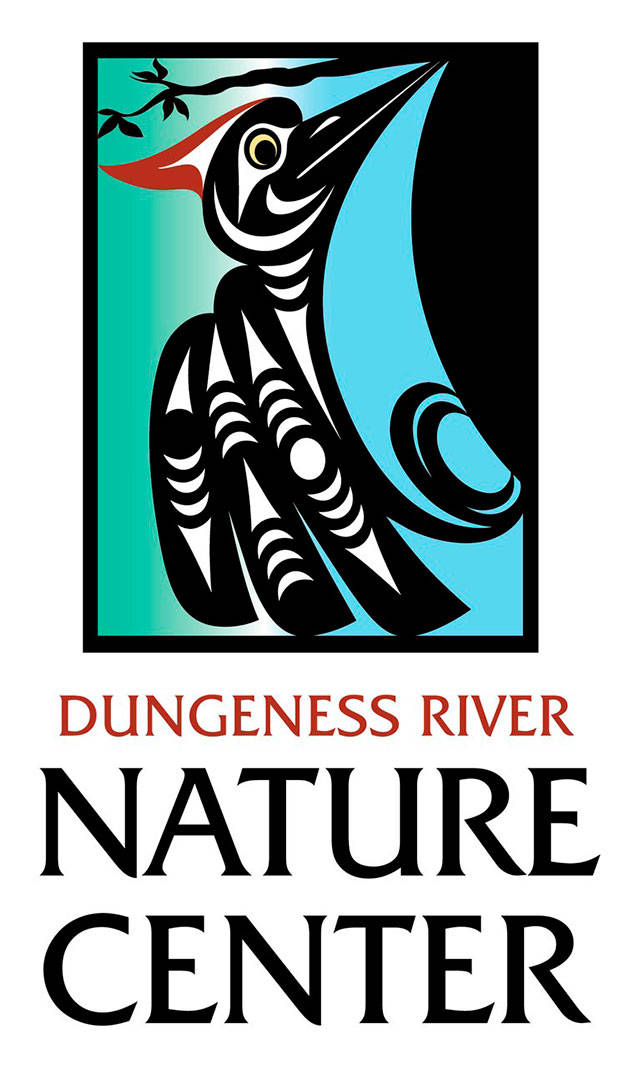
The River Center board also decided to write a new mission statement — “To inspire understanding, respect, and stewardship of our natural and cultural resources” — and it adopted a new logo that bears the new name.
“Because the River Center covers such a wide range of subjects that include everything from wildflowers, trees, insects, coyotes, hummingbirds and everything in between, we felt that it was also important for our mission statement to be reworked to include and describe best what we do,” Jones said.
The Olympic Peninsula Audubon Society will continue to sponsor and present bird-centric programs, field trips, BirdFest and classes, noted Ken Wiersma, the Olympic Peninsula Audubon Society president.
“Audubon” has been part of the River Center’s name and logo since 1997.
“While we’ll miss the Audubon name on the center, the new name represents a more inclusive commitment from each of the partners to the understanding and stewardship of our natural environment,” Jones said. “The National Audubon Society and their state office will continue to work in partnership with the center to achieve our shared goals.
“We have been active partners in the designs and capabilities built into the expanded center. As an entirely volunteer organization and the smallest of the local partners, we’re energized and ready to get into the center and do our part.
“We’re delighted to see the Pileated Woodpecker in Salish art, in the new logo.”
Expansion, remodel set
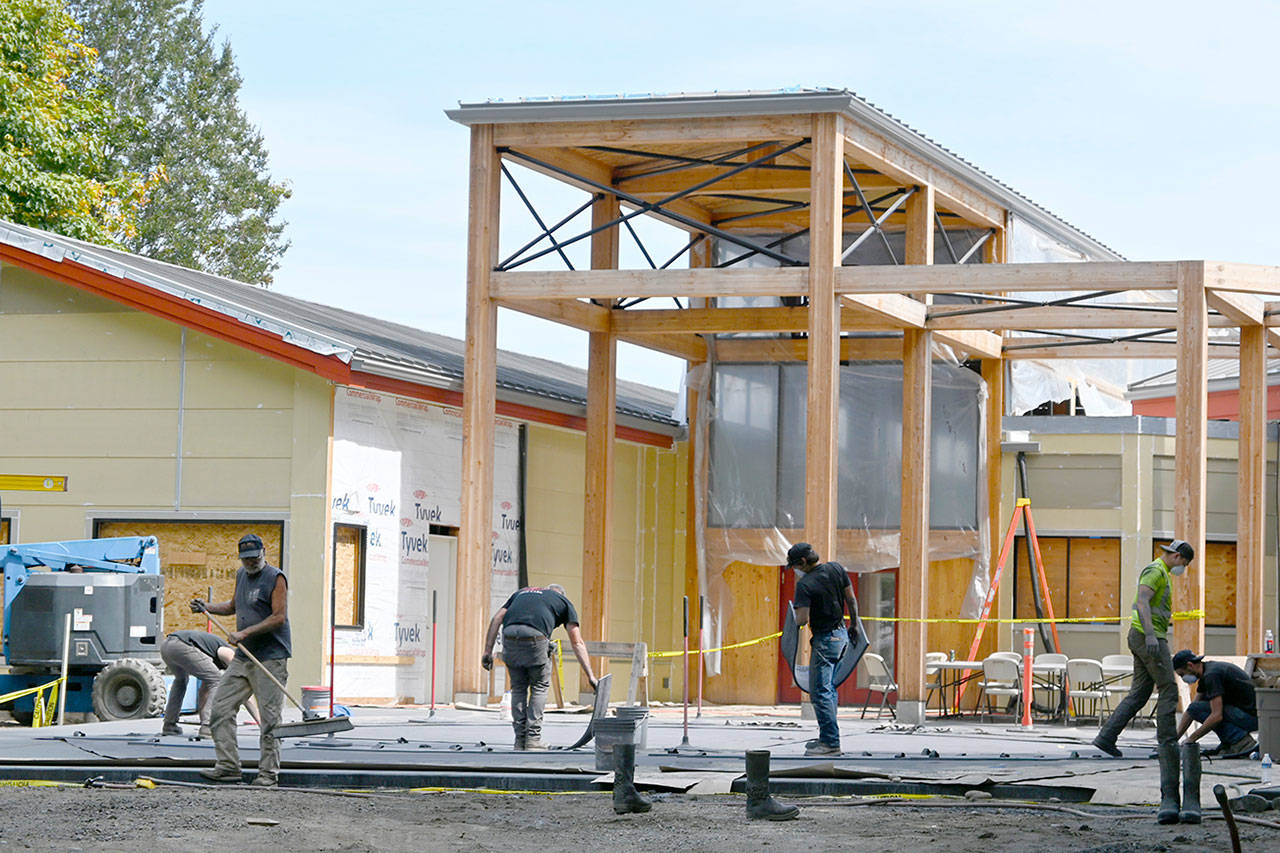
Set for a re-opening sometime later this fall, the River Center expansion and remodel is five times larger than the original building at Railroad Bridge Park and will look to integrate local natural history and the S’Klallam culture of the North Olympic Peninsula.
The expanded and remodeled facility includes a 150-person meeting room, a small conference/classroom, exhibit room, new office, gift shop, commercial catering kitchen, concession stand, wildlife viewing room, atrium and a large patio for outdoor activities.
The River Center sits in the 75-acre Railroad Bridge Park, owned by the Jamestown S’Klallam Tribe, and an active partner in the center since 1994. The tribe provides a range of maintenance, repair and park and center facilities upgrades, including caring for the historic railroad bridge that crosses the Dungeness River.
“Our Tribe is very excited about this expansion of the Dungeness River Center,” said W. Ron Allen, Jamestown S’Klallam Tribal Chair and CEO. “The new name and logo reflect a turning of the page in this Tribal/community program’s purpose — one that will enlighten many generations about the importance of the river and habitat for fish and wildlife to our community.
“The center will truly become a destination site honoring the beauty of the Olympic Peninsula.”
The first iteration of the River Center, the Sequim Natural History Museum, was founded by volunteers in 1984 in a single classroom in the old high school building,” said Annette Hanson, board president and co-founder.
“In 1994, our first board members envisioned a place where we could teach about the natural history of our area and the importance of respecting and preserving our wildlife and environment,” Hanson said. “We wanted to showcase the complexity of the Dungeness River. We imagined and planned for a center where all people could visit, learn, and feel welcome in the beautiful and natural setting of Railroad Bridge Park.
“Our vision was big, but we started small in 2001 with the opening of the first River Center building. Fast forward—now the timing is right—our vision is becoming a reality! We are so thankful for our partners, our community, and donors who are helping our shared vision come true. We’re almost there.”
New River Center logo
Artist’s statement
By Bud Turner, Jamestown S’Klallam House of Myths
“As I was working through the various ideas that could be displayed for the Dungeness River Nature Center logo, knowing that I would be using the Salish art form, one idea kept coming to mind: To use the Pileated Woodpecker as its symbolic image.
The Woodpecker is unique from the other birds: They do not collect twigs to make their nests, they carve them into the sides of trees with their strong beaks. The oblong holes drilled into tree trunks, both in pursuit of insects, and to create nesting cavities, are reused by other birds and mammals to raise their own young.
The Salish art form, that you see in this logo, was traditionally done through the craft of woodcarving.
Many examples of that art form can be seen on house posts, on house screens, on canoes, on bentwood boxes, and on ornate spindle whorls that were intricately carved with images of animals, birds, human, and supernatural figures.
These images were carved with simple shapes inside the figure, such as the crescent, the trigon, and the circle. These shapes make up the image of the Woodpecker in the new River Center logo.
The Woodpecker, poised with his claws in the bark and his strong tail bracing him against the tree to carve out his nest, is at the center, encompassing most of its space.
Between the Woodpecker and the tree is a long, flowing blue arc that represents the Dungeness River. The river’s banks form both the outline of both the tree and the Woodpecker.
Above the Woodpecker is a branch that reaches out from the tree and touches the other side of the logo to create a strong line, a canopy, for the image. Its leaves are a silhouette against a field of green.
The colors are simple but striking to the eye, like the green of the trees that you see throughout Railroad Bridge Park, and the blue of the river. The only red you see in the logo is the crested head of the Woodpecker, its color is singled out from the rest of the colors just as you would spot the Woodpecker in the wild.
The last color you see is a spot of yellow that makes up the crescent of the Woodpecker’s eye.
The colors of the logo are warm and welcoming to the viewer, inviting all to come inside the Nature Center to explore and learn all about the complex watershed of the Dungeness River.”
Artwork courtesy of Dungeness River Nature Center
