
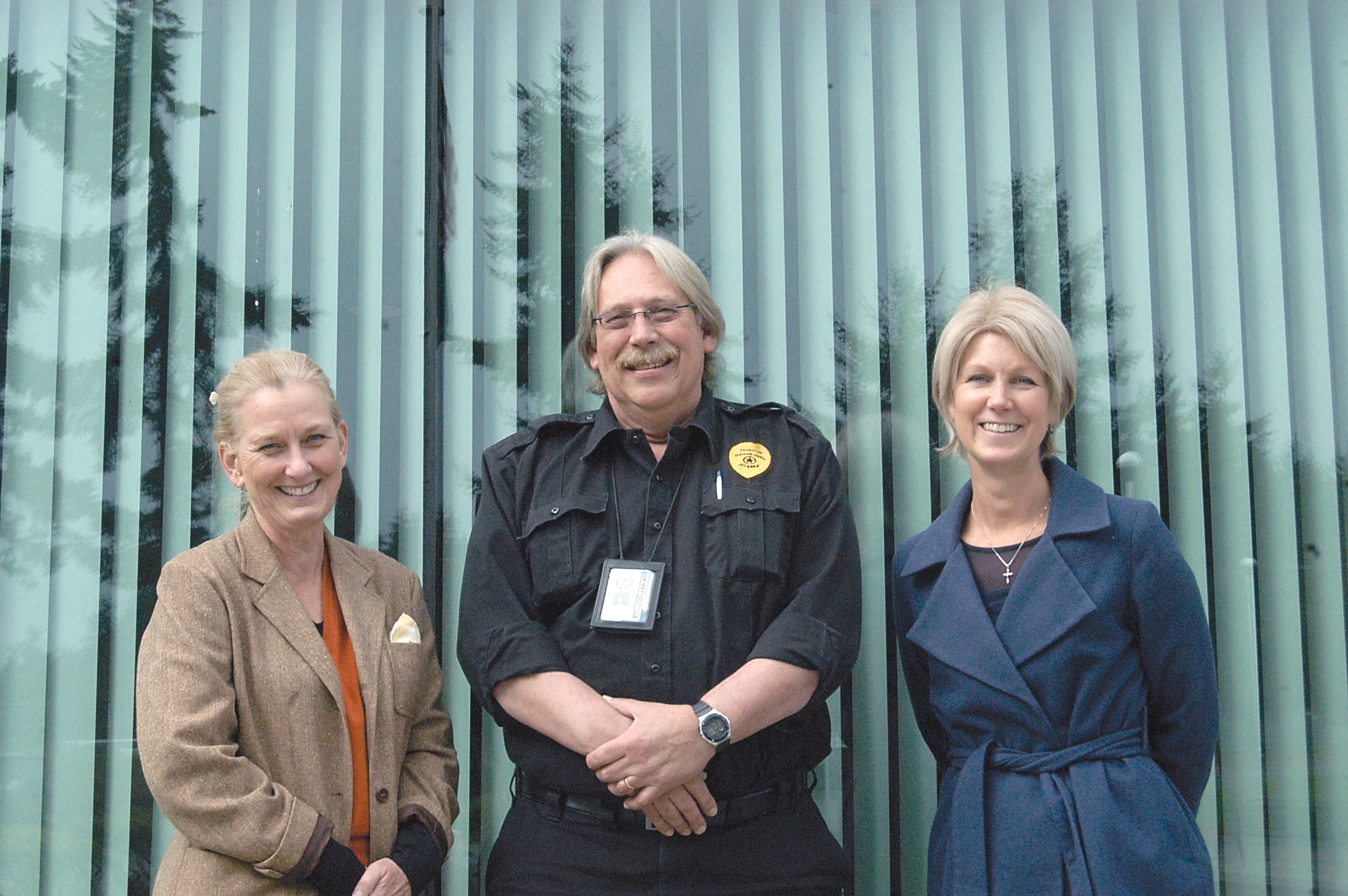
PORT ANGELES — The Clallam County Juvenile and Family Services facility turns 21 this month.
It does so with the distinction of being the only juvenile facility in the state to offer both a licensed crisis center for runaway youths and a licensed in-house treatment program for drug- and alcohol-addicted kids and those with brain disorders.
“We’re a full-service facility,” said Pete Peterson, longtime director of the facility at 1912 W. 18th St.
True Star Behavioral Health, a division within the juvenile court program, provides drug and alcohol evaluations, assessments, treatment, mental health counseling, family counseling and outreach to Port Angeles High School students.
It began in 1998 and was certified by the state Division of Behavioral Health and Recovery in 2000.
Crisis facility
About the same time, Clallam County opened a secure crisis residential center, a separate six-bed unit within the juvenile detention facility for non-offenders.
“We were licensed 15 years ago and have been licensed ever since for runaway kids and kids in crisis that need a secure facility to stay in,” Peterson said.
Thanks to a new facility and the efforts of retired Superior Court Judge Ken Williams, Clallam County in 1997 became the first county in the Pacific Northwest to open a juvenile drug court.
Drug court is a diversion program in which nonviolent offenders complete a court-supervised drug treatment program for at least one year to have their charges dismissed.
“Most of this stuff, if not all of it, wouldn’t be possible without the investment of the community and the county to build a facility that could operate all those programs,” Peterson said in a recent interview.
“And we’re all under one roof.”
Clallam County commissioners in 1990 began saving for the juvenile facility, which opened its doors to youths in October 1994.
Drugs, mental health
Over the past 21 years, Clallam County Juvenile and Family Services has focused on chemical dependency and mental health, Peterson said.
Heroin remains the “drug du jour” in Clallam and other counties because of its availability and low cost, he said.
“It used to be meth, and now it’s back to heroin,” Peterson added.
“It’s cheap and it’s everywhere.”
Drug and alcohol addiction and mental health problems can lead to truancy, crime and other issues for kids, Peterson said.
Behavior Health Coordinator Patty Bell said co-occurring disorders — a drug or alcohol addiction combined with an underlying mental health issue — is “primarily what we see.”
“It’s the No. 1 thing going on,” Bell said.
True Star Behavioral Health has used a portion of a federal grant to place a chemical dependency professional, A.J. Teel, in Port Angeles High School one day per week.
Teel does interventions, takes referrals and works with at-risk youths and their families.
“It’s been so successful that they want someone there full time,” Bell said.
True Star collaborates with Peninsula Behavioral Health and West End Outreach for mental health services and works closely with corrections staff to identify chemical dependency and mental health needs, Bell said.
“We get referrals for treatment through the court system,” Bell said.
“But now also with A.J. at the high school, we’re also getting lots of referrals from the high school, too.”
Requires involvement
Any family can access the department’s chemical dependency services, but the mental health program requires some involvement with the court system, diversion, probation, at-risk youth or other programs, Bell said.
“We’re not just here if a kid gets in trouble,” Peterson said.
Juveniles who do break the law may find themselves in a 24-hour detention facility.
The 32-bed facility provides food, clothing, shelter, all-day school, medical services, ministry services, Alcoholics Anonymous, Narcotics Anonymous and family visitation three days a week, department Deputy Director Jody Jacobsen said.
Having a good track record has helped Clallam County secure grants for its various juvenile programs, Peterson said.
“What we’ve been able to do here, many other agencies of similar size or smaller would like to do,” he said.
“But every community is different and resources are different.”
Clallam County Juvenile and Family Services has the equivalent of 36 full-time employees.
“We have a lot of really talented people,” Jacobsen said.
“It draws a certain kind of person to do this kind of work, and I really feel like our staff do it because they care about kids and families.”
For more information on Clallam County Juvenile and Family Services, visit www.clallam.net/JuvenileServices or call 360-417-2282.
________
Reporter Rob Ollikainen can be reached at 360-452-2345, ext. 5072, or at rollikainen@peninsuladailynews.com.
