
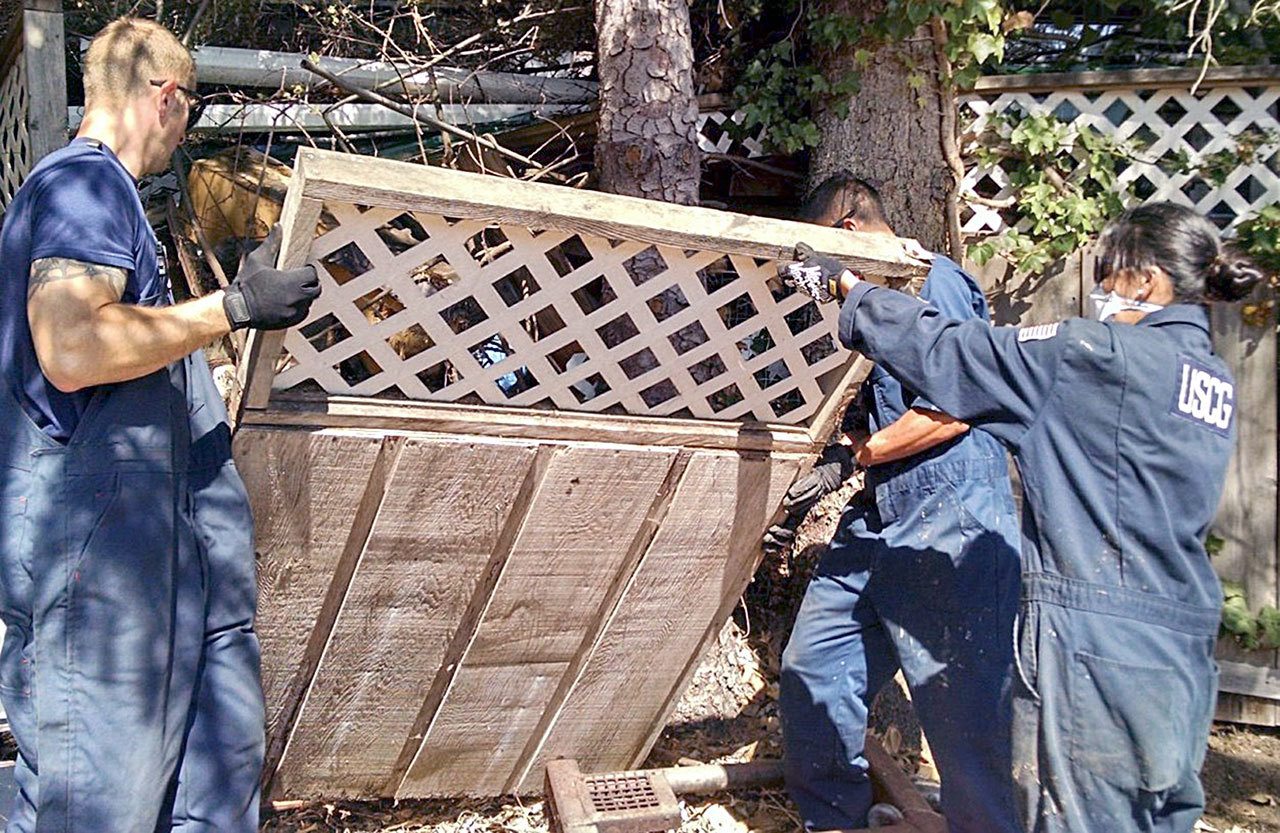
PORT ANGELES — Since forming in March, the Clallam County Hoarding Task Force has helped four disabled senior citizens clean up their homes in Clallam County.
The two men and two women “lived alone with no support when their health declined and they could not keep up with the necessary work they needed to do to clean up the home,” said Susie Winters, a hoarding specialist with the group.
The task force helps individuals clean up their homes if they are incapable of doing so themselves or if they have a hoarding disorder, Winters said, adding that it provides service to “anyone living with a hoard, no matter the reason.”
The group currently is made up entirely of volunteers, Winters said, and has not yet achieved nonprofit status.
“Our group is still forming, and we are looking for people who come into contact with those who hoard to join us and share their wisdom so we can serve our community with knowledge and understanding,” she said.
“We have worked alongside Habitat for Humanity, the U.S. Coast Guard, churches and volunteers from around the neighborhood. We have also worked with the Department of Social and Health Services, the city of Port Angeles, the Northwest Justice Project [and] individual professionals giving us guidance as we give assistance.”
Hoarding disorder, according to the Mayo Clinic (http://tinyurl.com/PDN-Mayohoarding), is a persistent difficulty discarding or parting with possessions because of a perceived need to save them. A person with hoarding disorder experiences distress at the thought of getting rid of the items. Excessive accumulation of items, regardless of actual value, occurs.
“A hoard is a stock or store of money or valued objects, typically one that is secret or carefully guarded,” Winters said.
“Some don’t notice there is a problem. Others know there is a problem but are too ashamed to ask for help.”
Hoarding disorder affects about 2 percent to 5 percent of the population, Winters said.
“Clallam County has a population of 72,312, according to the 2013 census,” she said, “so the population of those who live with a hoard in our county would be about 1,446 to 3,615.”
Hoarding often creates such cramped living conditions that homes may be filled to capacity, with only narrow pathways winding through stacks of clutter, according to the Mayo Clinic.
Some people also collect animals, keeping dozens or hundreds of pets in unsanitary conditions because they can’t care for them properly.
“The common situations in the home are too many items keeping [the resident] from using their rooms as they were intended and an odor due to rotting food or rodent infestation,” Winters said.
“It is typical to find no working refrigerator, stove and possibly no plumbing or electricity.”
Hoarding ranges from mild to severe, according to the Mayo Clinic. In some cases, hoarding may not have much impact on the individual, while in other cases, it seriously affects his or her ability to function on a daily basis.
“The client is stressed and fearful of judgment and/or losing their treasured possessions,” Winters said.
“The sense of loss of control is huge.”
People with hoarding disorder often don’t see it as a problem, making treatment challenging, according to the Mayo Clinic.
However, intensive treatment can help people with hoarding disorder understand their compulsions, giving them the ability to live safer, more enjoyable lives.
It takes a delicate hand to help those suffering from hoarding disorder, Winters said.
“We are sensitive and nonjudgmental in our approach,” Winters said.
“We are there to help, with health and safety being the goal. We will get to know the potential client and see if we can agree on what will be done. We can only help with their consent.”
The task force brings together the services of the city, county and state along with the professional services of therapists, organizers, cleaners and community volunteers “to do as much or as little is needed to keep both the client and community safe and healthy,” Winters said.
“It is so very important to hold the heart of the client — to be respectful of each item of theirs,” she said.
“One should not touch their items without first asking permission. Understand they are good people who enjoy helping others and they are doing their best at living life just as we all are.”
Individuals suffering from hoarding disorder are identified via government agencies or by referral from friends, relatives or neighbors, Winters said.
“These individuals have come to us thus far via Adult Protective Services, the Northwest Justice Project and a caregiver,” she said.
“We will take a referral from family, friends, neighbors or any other concerned person.”
The task force is seeking a volunteer to create and manage a website, Winters said, and is looking to partner with local nonprofit organizations to help provide “cost-effective ways to help those who live with a hoard to have a healthy and safe environment through collaborative efforts.”
Winters said she was inspired to form the task force as a result of her time with Loving Care Estate Cleaning Services of Port Angeles, which operated from 2011 to 2014.
“I see the need that nobody seems to be helping,” she said.
“There are elderly people, sick people and … people with very low income, and they are just out there and need help.”
For more about the task force — or to submit a referral — call 360-460-8927 or send an email to clallamcountyhtf@gmail.com.
________
Features Editor Chris McDaniel can be reached at 360-452-2345, ext. 56650, or at cmcdaniel@peninsuladailynews.com.
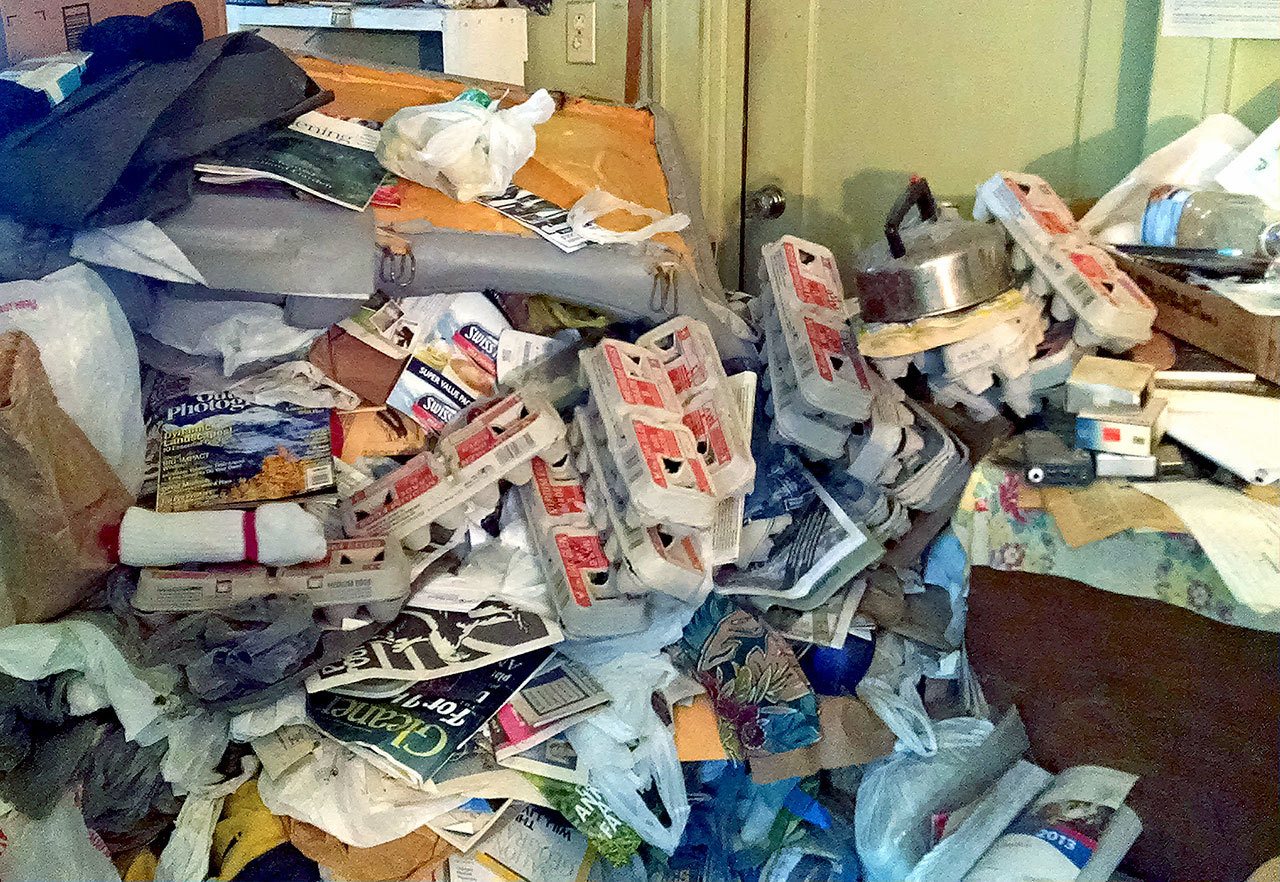
This photo was taken in one of the four homes cleaned up by volunteers since March. Hoarding disorder, according to the Mayo Clinic, is a persistent difficulty discarding or parting with possessions because of a perceived need to save them. (Clallam County Hoarding Task Force)
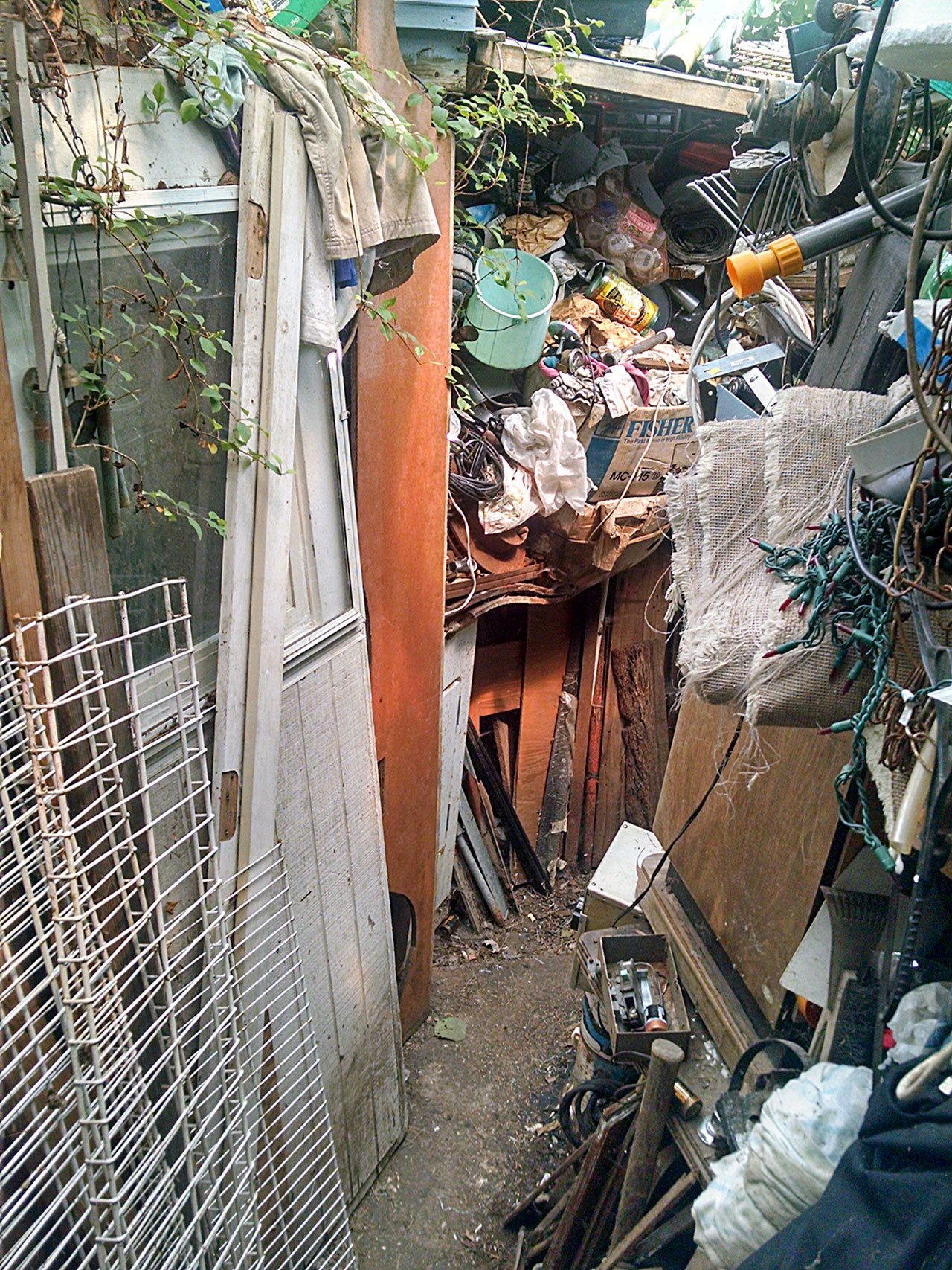
This photo was taken in one of the four homes cleaned up by volunteers since March. (Clallam County Hoarding Task Force)
