
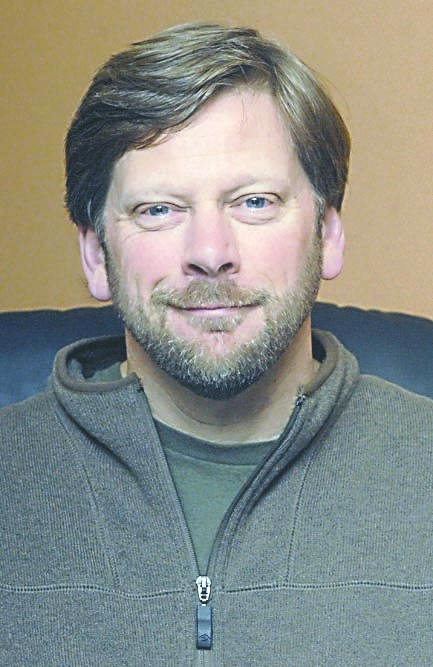
PORT ANGELES — The onus of funding environmental health programs should fall on Clallam County commissioners, the county Board of Health agreed this week.
Mike Chapman, who chairs the board of county commissioners, argued Tuesday that the advisory health board should not impose an annual fee on septic system owners to support a required monitoring program.
Such decisions should be left to elected commissioners whose main job is to fund county government through adoption of an annual budget, Chapman told his fellow health board members.
“You’re going to be in the crosshairs of a large political storm,” Chapman warned.
“For the volunteers, you guys don’t want to get in the middle of that.
Commissioners’ decision
“I think it’s a commissioners’ decision, and I think it’s just wrong for the Board of Health to weigh in with taxing the public,” Chapman added.
All three commissioners serve on the seven-member Board of Health.
Under state law, the Board of Health has the authority to impose fees for septic system monitoring, Environmental Health Director Andy Brastad said.
A work group that convened in 2006 to address water quality in the Dungeness River basin recommended that septic system owners pay a $10 to $20 annual fee to provide stable funding for inspections.
There are about 19,000 septic systems in Clallam County and more than 12,000 in the Sequim-Dungeness Marine Recovery Area, where bacterial pollution has been identified.
“It’s just kind of an ongoing thing now where we’re just trying to keep track of septic systems that are inspected,” Brastad told the Board of Health.
“We’re required to go out and identify problem systems and make sure that they’re fixed.”
Rather than charge an annual fee to collect the needed $200,000, Chapman suggested that the board of commissioners dedicate a portion of county sales tax revenue to environmental health.
Chapman and Commissioner Mark Ozias voted in January to restore the 8.4 percent county sales tax back from 8.2 percent effective April 1.
Commissioner Bill Peach voted against reinstating the full sales tax.
Last year’s board lowered the optional sales tax by 0.2 percent to try to stimulate the economy.
“We took the tough vote earlier this year to reinstate that revenue,” Chapman said.
“I, for one, don’t want to see the taxpayers in the county taxed twice.”
A per-parcel fee for septic system owners would represent a “double whammy” in the first quarter of this year, Chapman said.
He added that Clallam County has the revenue to fund environmental health for the foreseeable future.
Two Board of Health members — Dr. Jeanette Stehr-Green and Jeanne LaBrecque — are volunteers.
Two others — Forks Mayor Bryon Monohon and Forks Community Hospital Commissioner Donald Lawley — represent smaller jurisdictions.
“In essence, the four of you could usurp the authority of the county commissioners and the electorate,” Chapman said.
“I think it’s a very bad precedent. And once this board took that authority, where would it stop?”
Said Peach: “I’m clearly against any tax increase, and I will vigorously oppose it.
“But I like that idea of reallocating the budget,” Peach said.
“Mike’s onto it. What is it that we have [in the budget] that’s a lower priority than doing this?”
Ozias requested more information from environmental health staff about funding requirements for septic inspections.
If commissioners fail to provide adequate funding, the Board of Health could “come back around and say, ‘OK, this is still a priority, it’s not going to get funded that way, so what’s our next step?’ ” Ozias said.
“That’s how I would see it playing out.”
At the end of the discussion, the health board voted unanimously to move environmental health funding to the auspices of the board of county commissioners.
“The Board of Health can certainly witness those discussions and reflect on them and such,” said Stehr-Green, who chairs the Board of Health.
“Although I don’t want to get into the politics of things, I do think that it’s a role for the Board [of Health] to help bring attention to a possible need.”
She added: “We don’t want any faltering of this critical program.”
________
Reporter Rob Ollikainen can be reached at 360-452-2345, ext. 56450, or at rollikainen@peninsuladailynews.com.
