
EDITOR’S NOTE — This story has been updated with reminder that, as part of the dam removal, the Elwha River and its tributaries are closed to all fishing. In addition, boating is prohibited from Upper Lake Mills Trail to Altair Campground.
OLYMPIC NATIONAL PARK — The kings have returned to the Elwha River.
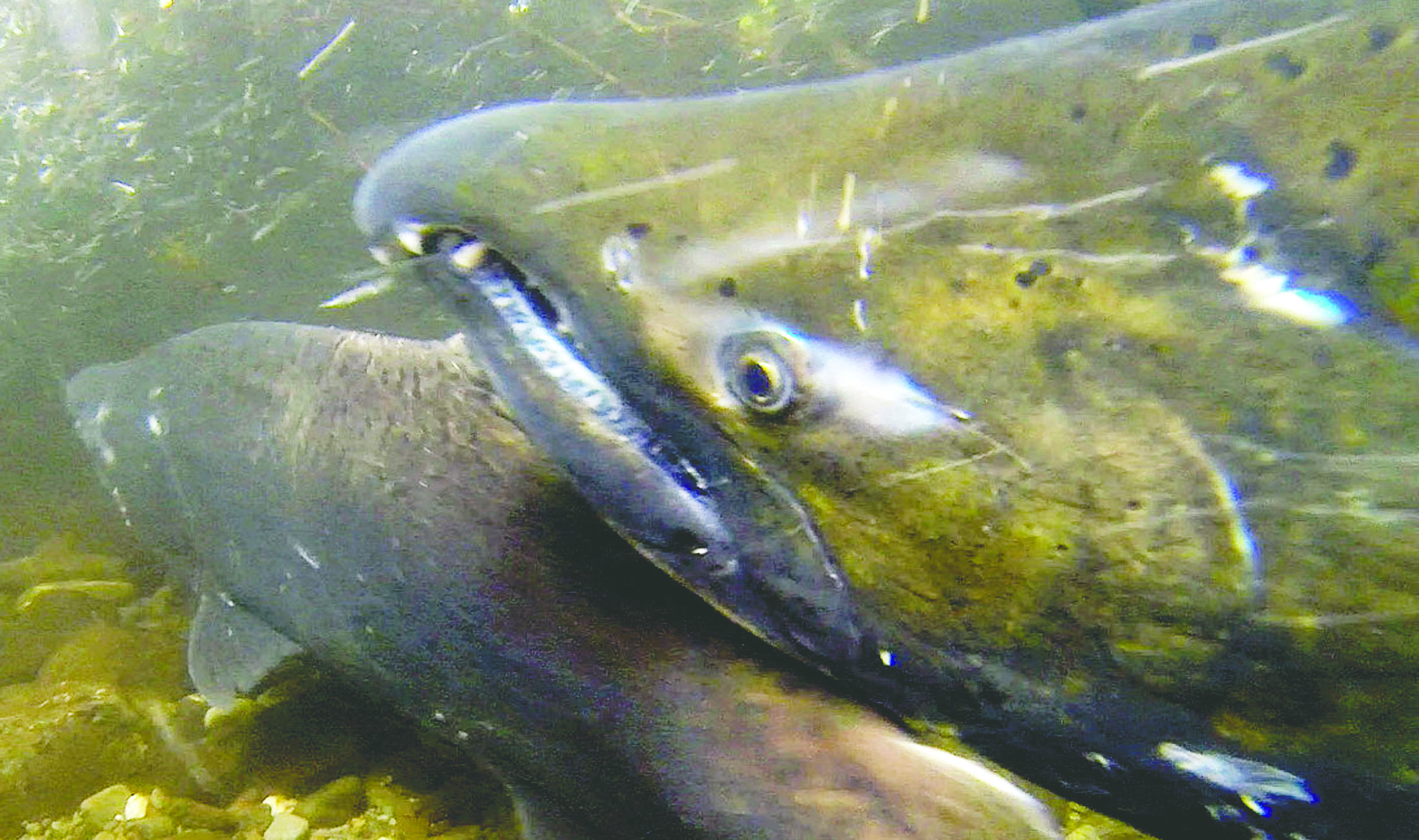
One year after chinook were sighted— the first in 100 years — in the Elwha River above the site of the former Elwha Dam, adult chinook again have been spotted above the dam site, about 8 miles west of Port Angeles.
Wildlife biologists have counted at least 500 adult chinook in the river, as well as a few pink salmon and coho, said Rainey McKenna, spokeswoman for Olympic National Park, in which most of the river runs.
The official count will be released in November, but biologists said the run looks nearly identical to that of 2012.
“The run is every bit as strong as last year,” McKenna said.
The fall run of chinook is just past its peak, and numbers are continuing to increase daily, she said last week.
Silt is no problem for the fish, she added.
In April, the state Department of Fish and Wildlife, operating a separate fish hatchery along the Elwha River, attributed the deaths of year-old chinook salmon, which were found along the Elwha banks, to heavy sedimentation in the river.
But now, because of a hold put on dam removal while filtration issues are addressed at the federally funded Elwha Water Treatment Plant and surface water intake — and because of low summer rainfall and runoff levels — the amount of sediment in the river water has returned to normal levels, within healthy ranges for salmon, McKenna said.
The best place to see the chinook as they move upstream is from the Altair Bridge on Olympic Hot Springs Road near the entrance to Altair Campground, Rainey said.
“There has been some good viewing,” she said.
The big fish sometimes jump out of the water or roll across the surface as they swim upstream seeking a suitable place for a redd, or nest, to lay eggs in before dying.
“There are park staff looking for redds in tributaries,” McKenna said.
No fishing
As part of the dam removal, the Elwha River and its tributaries are closed to all fishing.
In addition, boating is prohibited from Upper Lake Mills Trail to Altair Campground. A five-year no-fishing moratorium to help the river following the removal of the two dams went into effect in 2011.
Indian Creek and Little River, which enter the Elwha River between the two dams, accounted for a large number of last year’s redds.
Unofficially, chinook on their way up river to find tributaries for spawning were spotted by national park employees and fish biologists inside Olympic National Park boundaries by Aug. 10.
A fish-counting seine was installed near the state Highway 112 bridge by Fish and Wildlife the first week of August.
Some early returning chinook probably passed the seining site before it was installed, McKenna said.
The Lower Elwha Klallam tribal hatchery set up a fish-counting sonar system — which can tell the difference between the big chinook and the much smaller pink salmon — about 1 kilometer south of the river mouth, McKenna said.
In 2012, biologists counted about 2,200 chinook as they passed those locations on their way to spawning beds, she said.
“This year, the salmon run is about the same, and the season is about halfway done,” she said.
Estimates for the ratio of hatchery-reared salmon compared with wild-hatched salmon were not available.
Pink salmon, also known as humpback, are the smallest of the salmon species. While chinook can grow to 40 to 50 pounds or larger, pinks can grow up to 12 pounds, according to the Fish and Wildlife website.
When Elwha Dam became operational in 1913, more than 70 miles of pristine Elwha River fish habitat was blocked. That dam, and a second dam built 8 miles upstream — Glines Canyon Dam — were built without fish ladders.
Four native species of Pacific salmon — chinook, pink, coho and chum — and steelhead, a seagoing rainbow trout, were confined to the lower 5 miles of the Elwha and tributaries below Elwha Dam, just west of Port Angeles and outside the national park.
The pre-dam run of 400,000 chinook salmon in the Elwha was reduced to about 4,000, according Fish and Wildlife estimates.
Two years ago, the process of removing the dams began, and in 2012, the chinook, giants of the salmon world, were spotted in the park for the first time in a century.
The last remnants of the 108-foot Elwha Dam were removed in March 2012, and steelhead were discovered above the dam site.
Glines Canyon Dam removal was halted after silt infiltrated the park’s water-treatment plant. It is expected to resume after repairs are made.
By summer 2014, after the $325 million federal project to remove the dams is finished, the glacier-fed Elwha River is expected to flow freely as it courses from the Olympic Mountains to the Strait of Juan de Fuca.
Kokanee, a small landlocked freshwater variation of sockeye salmon, which are in Lake Sutherland and were in the former Lake Aldwell behind Elwha Dam, are expected to recolonize the river through Indian Creek, which connects Lake Sutherland to the Elwha River.
________
Reporter Arwyn Rice can be reached at 360-452-2345, ext. 5070, or at arwyn.rice@peninsuladailynews.com.
