
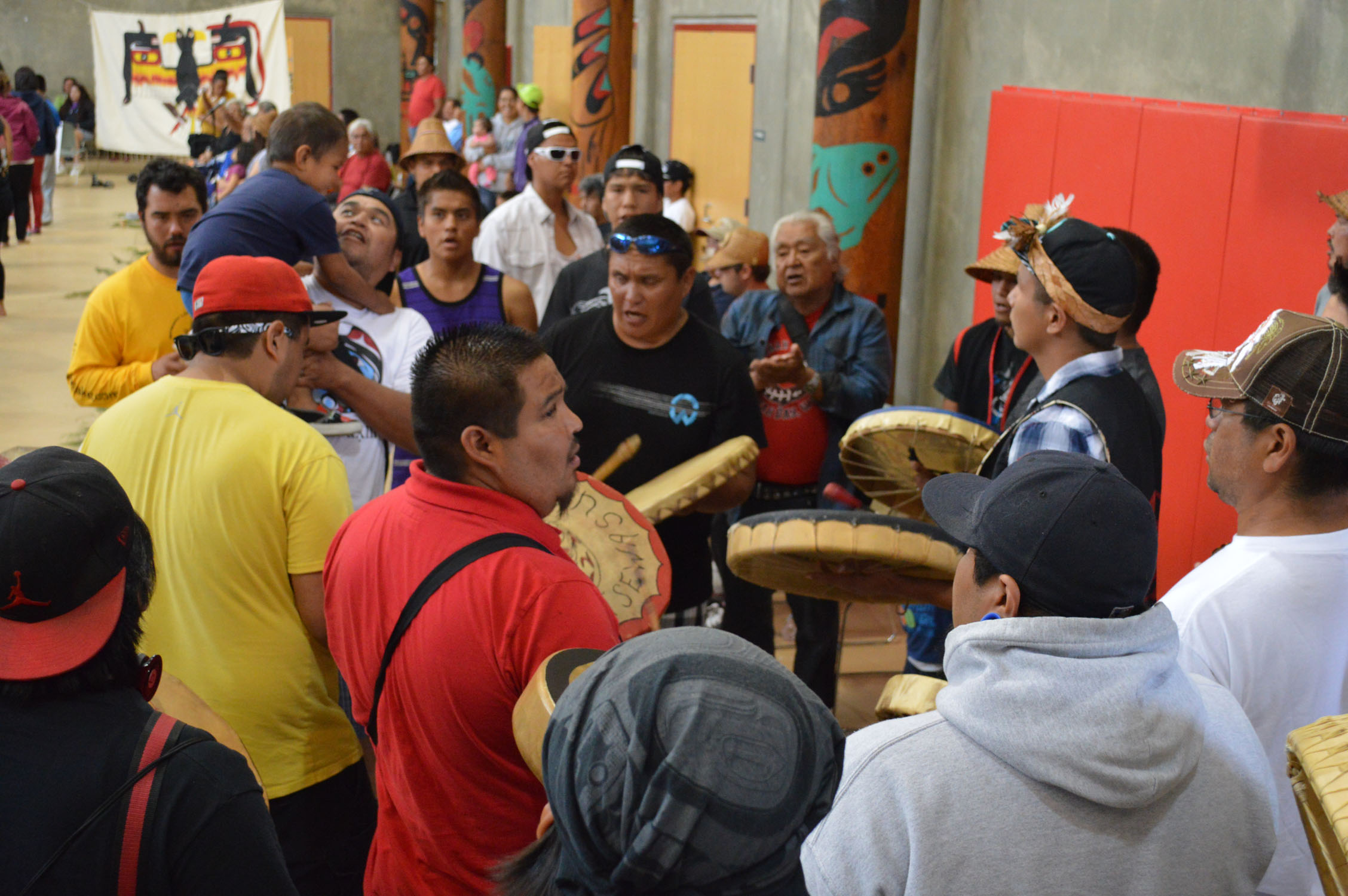
LAPUSH — Nearing the end of their long 2013 Canoe Journey, around 100 canoes from tribes from the Puget Sound, the Strait of Juan de Fuca and British Columbia are expected to put to sea today from First Beach in LaPush.
After spending two days celebrating their arrival on Quileute beaches, the tribes and their canoes are expected leave LaPush by about 7 a.m. today and head south to the Hoh River mouth today between 1 p.m. and 3 p.m.
The flotilla will receive a welcome ceremony from the Hoh tribe.
The Hoh will be the final tribe on the paddle journey’s route before the host Quinault welcome the canoes later this week as host of a large potlatch and gathering to climax the 2013 event.
“We are excited to have helped co-host the journey,” said Russell Brooks, event coordinator for the Quileute tribe.
The two-day stay with the Quileute has given canoe families a rest during the open-ocean leg of the journey, which involves more than 100 miles of pulling for many participating tribes.
When the pullers reach the Hoh, they will be taken to dinner at the Hoh gymnasium on Lower Hoh Road in West Jefferson County, said Tribal Chairwoman Maria Lopez.
The Canoe Journey then will continue to the host tribe’s territory.
Quinault tribal elders and members will first meet the canoes near the mouth of the Queets River on Wednesday, then greet them again Thursday before hosting a week of camping, potlatches and celebration at Point Grenville, just north of Taholah in Grays Harbor County.
The Quinault lands straddle West Jefferson and Grays Harbor counties.
Begun in 1989, the Canoe Journey is a yearly spiritual trek during which the tribes of the Pacific Northwest and B.C. First Nations come together to paddle together, share traditional songs and dances and celebrate.
Members of the crews, called “canoe families,” are never called “paddlers” but “pullers,” and the canoes never are called “boats.”
Offending pullers — and visitors — are asked to jump in the water as a corrective action for the verbal gaffe.
Each year one tribe organizes the journey, planning the route and coordinating with the other tribes.
The groups camp along the way and meet together at the end for a potlatch, a celebration of life that involves traditional feasting, gifting and praying.
The Canoe Journey makes a drug- and alcohol-free space for elders and young people alike to re-learn and strengthen their tribal traditions.
Reporter Arwyn Rice can be reached at 360-452-2345, ext. 5070, or at arwyn.rice@peninsuladailynews.com.
