
By Geoff Mulvihill
The Associated Press
The goal is impressive: Hammer out a legal deal that starts guiding the nation out of an epidemic of opioid addiction.
How and when that can happen, if at all, is the subject of talks scheduled to begin Wednesday in a federal courthouse in Cleveland.
The judge is bringing together lawyers for governments across the country, drug makers, distributors and others to start the conversation. Because the aim is to broker a settlement, the judge has closed the discussions to the public and media.
A look at how the sides got to this point and some of the details they have to work out:
The epidemic
Opioid addictions and overdoses are a deepening crisis for the country.
The U.S. Centers of Diseases Control and Prevention says 42,000 people died of overdoses in 2016 from opioids, a class of drug that includes powerful prescription painkillers such as OxyContin and Vicodin; illegal heroin; and fentanyl, a strong synthetic drug sold both through prescriptions and on the street.
President Donald Trump last year declared the crisis a national public health emergency, and a bipartisan National Governors Association letter this month urged him to provide more federal money and coordination for addressing the problem.
In addition to costing lives, officials have worried that it’s hurting the workforce and overwhelming child welfare systems as children of addicts flood the system. In their legal complaint, officials in Everett, Washington, blamed opioid addiction for a spike in homelessness.
A White House Council of Economic Advisers report last year found the national economic impact of opioid addiction at just over $500 billion a year.
The lawsuits
Cities and counties of all sizes have sued companies that make and distribute prescription opioids. Among the plaintiffs are Philadelphia; the state of Ohio; Princeton, West Virginia; the Cherokee Nation; a consortium of counties across Wisconsin; and counties and cities in Washington state.
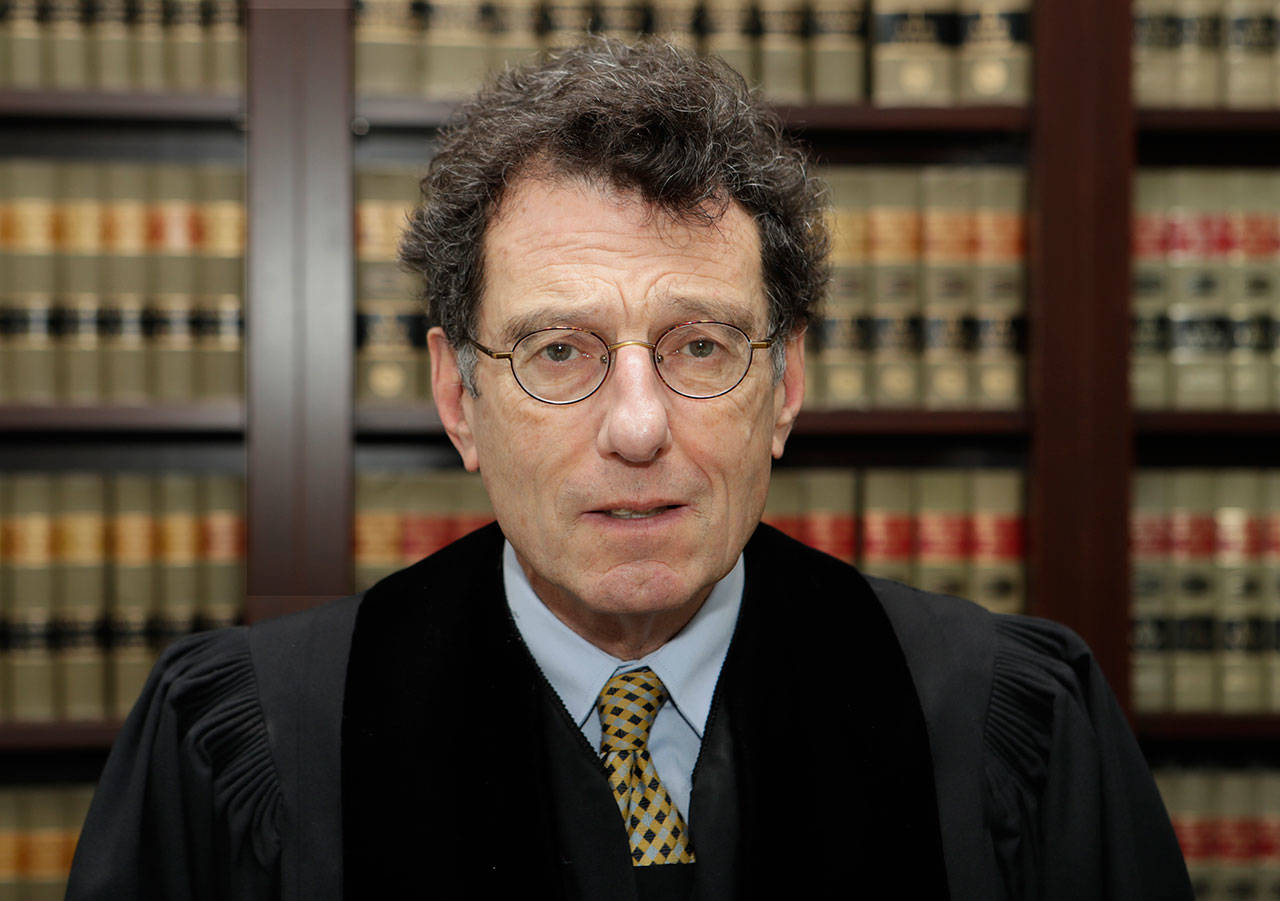
More than 250 such claims filed in federal courts across the country have been consolidated under Judge Dan Polster, who is based in Cleveland.
Polster has called the epidemic “100 percent man-made” and asserted that other branches of government have “punted” on solving it. He is pushing for a resolution before the case goes to trial.
He has invited many parties to the table, including ones that technically do not have cases under his watch. Addiction experts are scheduled to address the lawyers today.
The judge asked Ohio Attorney General Mike DeWine to represent a group of at least nine states that have sued the industry in state courts. He also invited representatives of a group of about 40 state attorneys general that have not sued but have joined together to investigate the industry; at least one state attorney general from that group, Tennessee’s Herbert Slatery III, was planning to be there. That group already has had some settlement talks with companies.
Additionally, officials with the federal Drug Enforcement Agency and the U.S. Food and Drug Administration are being asked to head to Cleveland, as are representatives of insurance companies and the firms that are defendants in the lawsuits.
The judge
Polster was nominated by President Bill Clinton and has been on the bench since 1998. He has made clear that he wants to use the cases before him as a way to forge a solution to the opioid crisis — not just a legal resolution.
“What we’ve got to do is dramatically reduce the number of pills that are out there, and make sure that the pills that are out there are being used properly,” Polster said in an earlier hearing in the case, which was assigned to him in part because Ohio has been hit hard by opioids.
“Because we all know that a whole lot of them have gone walking, with devastating results.”
Polster is a judge with a history of trying to settle cases before they get to trial.
He drew attention last year for a speech he made after President Donald Trump criticized the federal judiciary. Without naming the president, Polster said that a public office holder who makes those types of comments “calls into question his or her own legitimacy.”
Why settle?
For the drug industry, it could be easier to enter into one massive settlement than deal with hundreds of claims before multiple judges.
For governments, working together may represent the best chance of not only getting money to pay for treatment and other costs related to the epidemic but also to force reforms.
Perhaps the most comparable example of such a sweeping settlement over a public health epidemic came in 1998, when the four largest tobacco companies agreed to pay 46 states more than $200 billion over 25 years. The money was to fund public health programs and anti-smoking campaigns.
Legally, there is a major difference between opioids and tobacco: Prescription painkillers are approved by the federal government, prescribed by doctors and have legitimate medical uses.
That’s a point the companies that manufacture and distribute the drugs make in court papers as they try to minimize their responsibility for the crisis, even as they say they want to help solve it.
Decisions ahead
There’s no way of knowing how much money a settlement would cost the pharmaceutical industry, if one is ever reached. New York City’s lawsuit filed this month asks for more than $500 million.
To reach a settlement, the parties will need to figure out more than the price.
How much of the settlement would be the responsibility of the name-brand manufacturers that do most of the opioid marketing? How much would be the responsibility of the companies that sell even more pills as generics? What about distributors and drug store chains, which are named in some of the lawsuits?
And what about restrictions on how money in a settlement is spent? States used payments from the tobacco settlement to help balance budgets and for government services outside public health.
In the opioids case, some negotiators might insist on provisions to prevent that from happening. Various governments want to use money to pay for emergency responders burdened by the crisis, as well as education and treatment programs.
Paul Hanly, a lawyer who represents nearly 200 local governments that have sued drug makers and distributors, said his clients have a wide range of interests aside from money.
Some are deeply concerned about limiting the types of medical conditions for which opioids could be prescribed. For others, crackdowns on diverted drugs — prescription medicines stolen or fraudulently prescribed to be sold on the black market — are a top priority.
