
The Associated Press
and McClatchy News Service
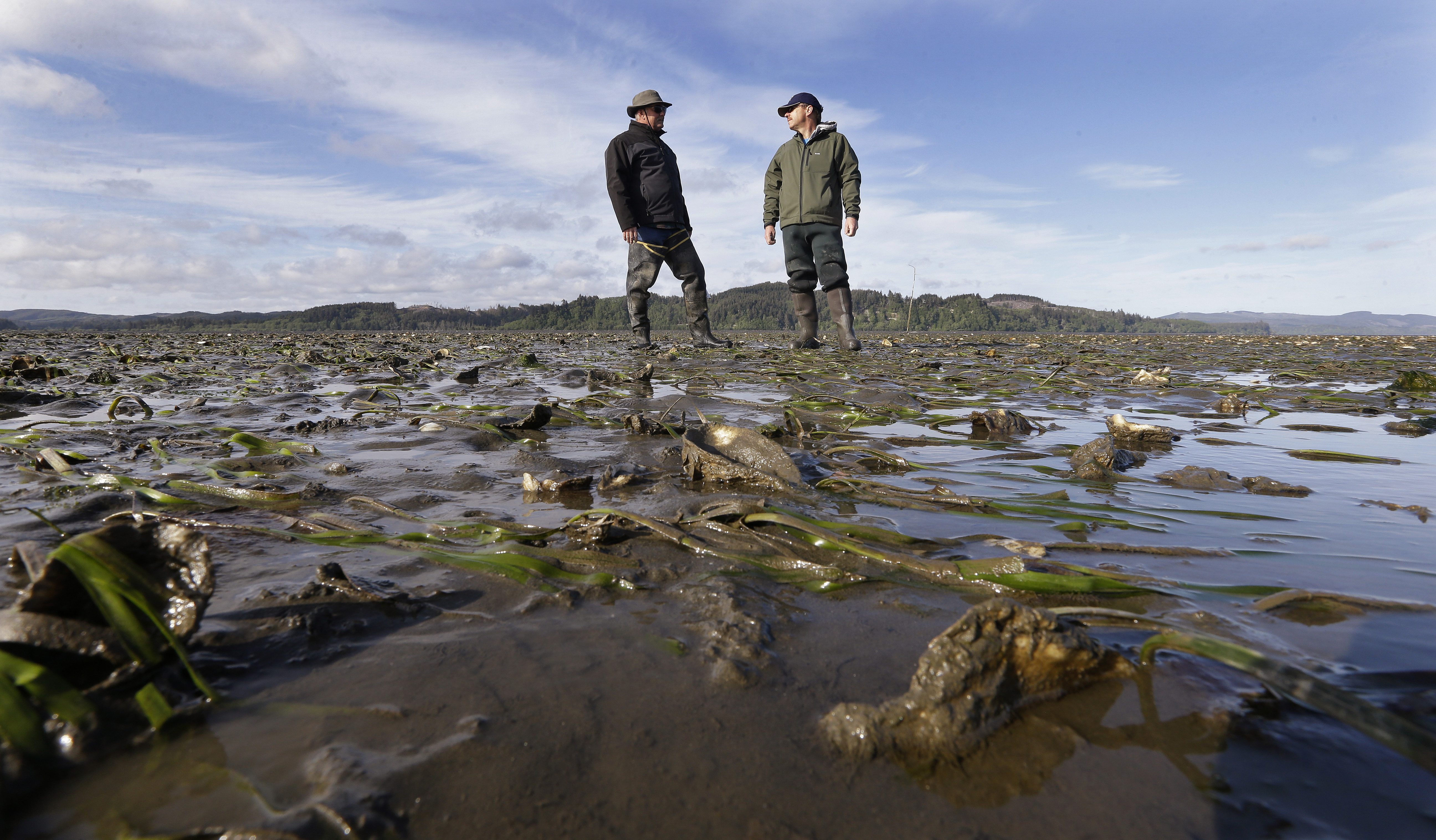
WILLAPA BAY, Pacific County — The state Department of Ecology and a growers association have agreed to cancel a permit to spray a controversial pesticide over shellfish beds in two areas of coastal southwest Washington.
The permit to use imidacloprid, a neurotoxic pesticide, on up to 2,000 acres of commercial shellfish bays in Willapa Bay and Grays Harbor, two bays that account for a quarter of the commercial oysters produced in the U.S., had prompted a deluge of complaints from environmentalists, restaurant owners and residents across the state.
Last Friday, with public and customer concerns rising, Taylor Shellfish, Washington’s largest shellfish producer and a major backer of using the pesticide, announced it was abandoning its plan to use the toxin to combat burrowing shrimp, which have been wreaking havoc on local oyster beds.
Critics, including the U.S. Fish and Wildlife Service and the National Oceanic and Atmospheric Administration, worried about unintended harm to other species. The plan to use imidacioprid, they said, had too many unknowns about the pesticide’s effects on other organisms, including those that are a food source for threatened species.
“One of our agency’s goals is to reduce toxics in our environment,” state Ecology Director Maia Bellon said in a news release Sunday.
“We’ve heard loud and clear from people across Washington that this permit didn’t meet their expectations, and we respect the growers’ response.”
In a letter sent Sunday to state Ecology requesting withdrawal of the permit, Don Gillies, president of the Willapa-Grays Harbor Oyster Growers Association, said: “We believe we have no choice but to withdraw our permit and address these issues to the satisfaction of our customer base, and the public.”
The pullback means, however, that oyster growers in Willapa Bay and Grays Harbor will have to find another way of fighting the burrowing shrimp, which destabilize tideflats, causing oysters to sink and suffocate.
Bill Dewey, a spokesman for Taylor Shellfish, told The Seattle Times on Friday that imidacloprid, which replaces carbaryl, another type of pesticide recently phased out by local growers, was the industry’s last hope.
But the decision to pull the plug was made to protect Taylor’s name, he said in an interview Sunday. After all, the company has farms in other locations. “We can’t let the brand go down over this issue,” he said.
State Ecology officials said oyster growers have attempted a wide array of methods to fight off the stubborn shrimp, ranging from covering tide flats with gravel and shells to injecting them with habanero-pepper extract and garlic oil.
They also considered running four-wheel-drive vehicles over the oyster beds to crush the creatures’ burrows, and electroshocking them away.
But the most effective method, in the department’s eyes, was the imidacloprid, which state Ecology officials said was used in flea collars and food crops. It’s supposed to paralyze the shrimp and is “far less of a threat” to vertebrates, the agency said in a recent blog post.
“Anything you can imagine, we’ve tried it,” said Taylor’s Dewey.
Seattle chefs played a key role in increasing the pressure on growers. Speaking to The Times last week, chef Jim Drohman of Cafe Presse and Le Pichet said he would be contacting his suppliers to make sure he wasn’t serving pesticide-sprayed oysters. Renee Erickson of The Walrus and The Carpenter said she was “horrified” by the state’s plan.
Taylor’s decision to pull the plug on the pesticide also likely played a part in making the other producers reconsider the plan, a state Ecology spokesman said.
The pesticide’s original manufacturer specifically states it’s not for use in water. But Taylor’s Dewey maintains imidacloprid is safe, and that the industry invested around $1 million over the past five years to make sure it’s registered for specific use in water.
He said the media coverage generated some “serious misunderstanding.”
The DOE said it will complete the paperwork to cancel the permit today.
In comments to the state, NOAA noted that state Department of Ecology “is clearly aware that imidacloprid is a persistent broad spectrum pesticide that will kill nearly all benthic (sediment-dwelling) organisms on acreage directly treated.”
Research “clearly indicate that effects and damages will not be limited to the treatment sites,” added the U.S. Fish and Wildlife Service.
Helicopter spraying over the two estuaries would have begun as early as May 17. Areas can only be sprayed once a year, during daytime low tides. Up to 2,000 acres would have been allowed a year, so up to 10,000 acres could potentially be sprayed over the five-year permit, the state Ecology department said.
Willapa Bay is the largest producer of farmed oysters in the U.S., mostly nonnative Pacific oysters.
The ghost and mud shrimp are native to the area and play a role in the ecosystem, NOAA and U.S. Fish and Wildlife said.
They acknowledged the challenge oysters growers face — but urged investigating other ways to grow oysters without chemical control.
“We think shellfish industry plays an important role in our local and state economy but we also think that the health of these incredibly important estuaries shouldn’t be compromised in support of the industry,” said Trina Bayard, director of bird conservation for the Washington office of the National Audubon Society.
