
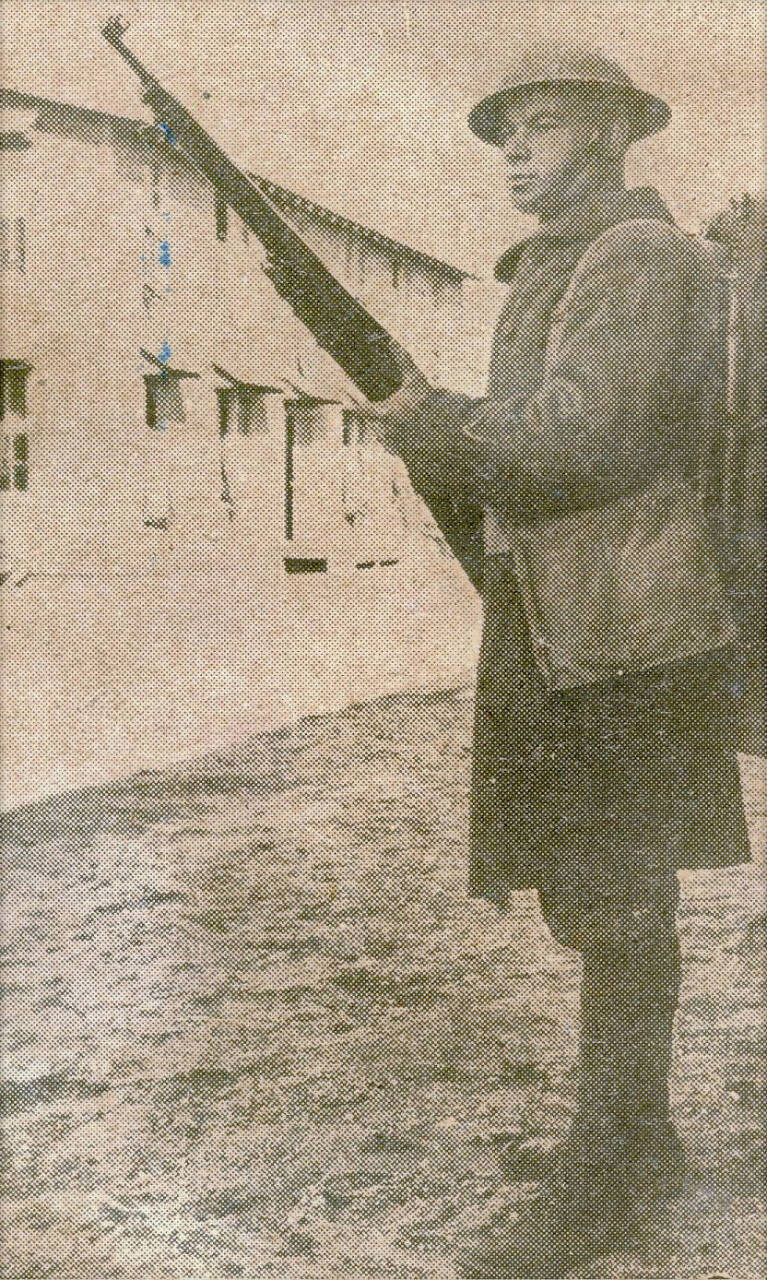
WHEN PEOPLE PASS away, there are always earthly possessions left over from someone’s life. Many of us have been left with the job of dealing with it. It can be dusty and dirty work.
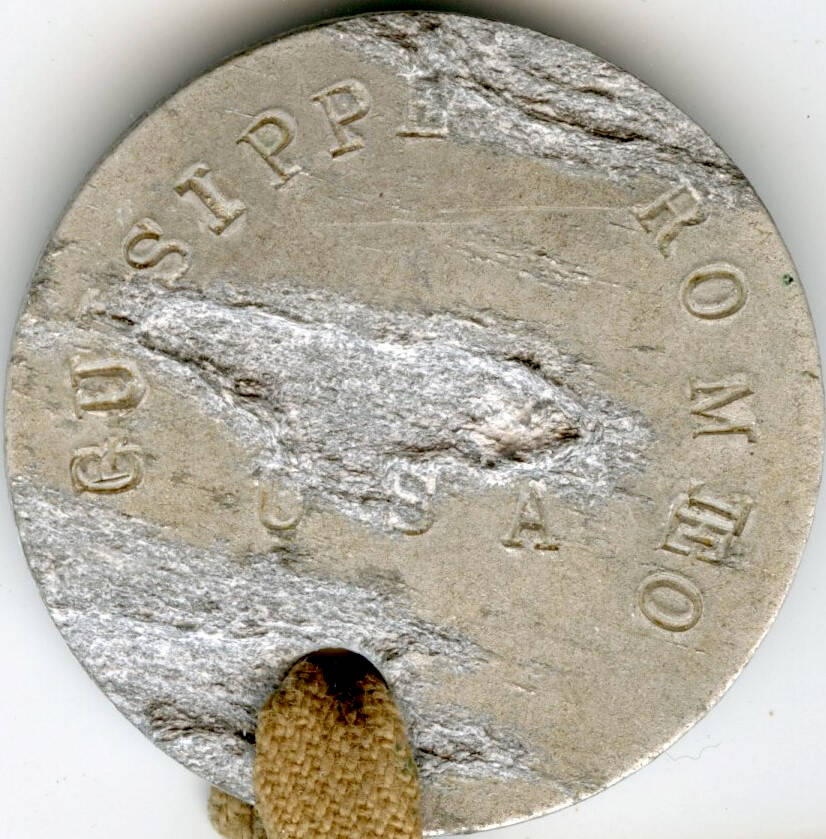
During one such cleanup, I began to come across some interesting items. A World War I helmet. A canteen. A gasmask. Soon I had found some trench art. Later, I found WWI dog tags, a trench knife, a notebook and a small, published book.
It did not take long to realize I had come across items that collectively told an interesting story. They were an important part of the story of Pvt. Giuseppe Romeo.
Guiseppe Luciano Romeo was born in Chimea, Italy, on April 13, 1891. He immigrated to Canada in 1907, finding work in Montreal. Soon, he found his way to Vancouver, B.C.
In September 1909, Guiseppe came to Seattle. While he was there, he worked for the Cascade National Park.
Later, Guiseppe moved to Tacoma and worked at the smelter.
On Feb. 3, 1913, he became a naturalized United States citizen.
Guiseppe returned to Seattle to work at Pacific Steel and Iron Works. At that time, war began to grow in Europe. World War I had started. On Oct. 4, 1917, Guiseppe was drafted into the U. S. Army.
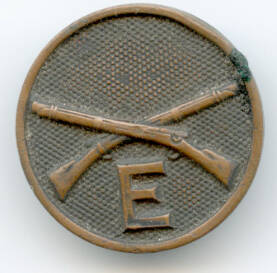
During that time, Guiseppe had a “disagreement” with a corporal that resulted in three days of hard labor. He was then transferred to Company E, 361st Infantry. His Company was known as “Hungry E.” He remained with Company E throughout the war.
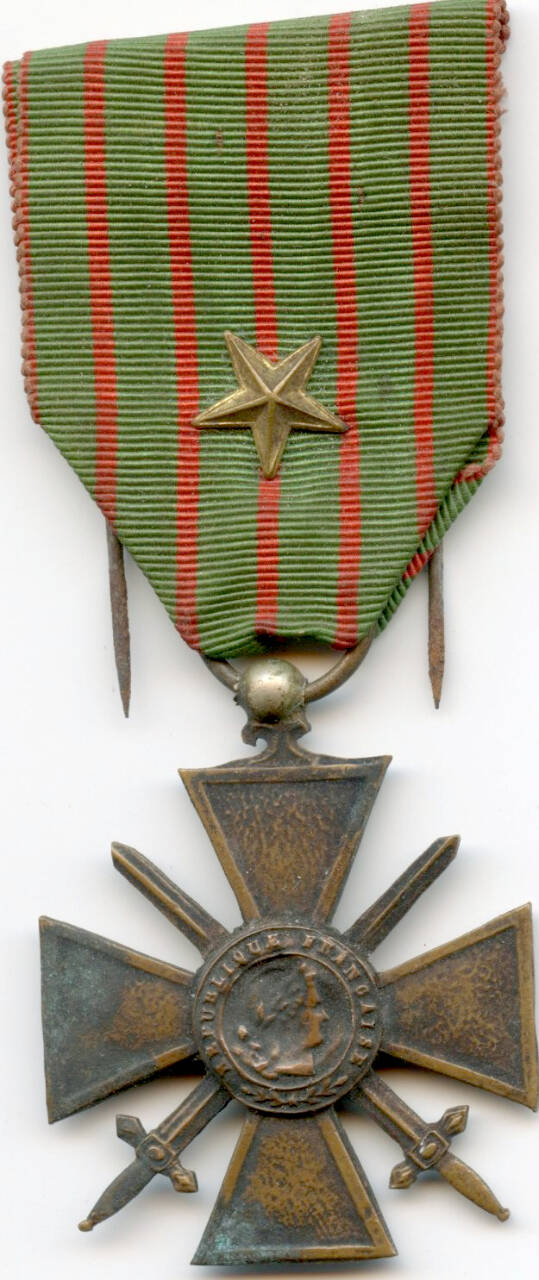
On July 20, Guiseppe embarked for France. While there, he saw some action.
Sept. 26: “Moved out of trenches at day break and advanced across ‘No-Mans Land’ which was torn up by artillery. Saw our first comrades who had given their all. Also some dead Germans. Only one meal of corned willie and one hard tack. Slept along the side of the road.”
Sept. 27: “First trip over the top. Captured the town of Eclesfontain.”
Sept. 28: “Were heavily shelled in the p.m. McMullin and Williams killed. Several killed and wounded. Raining hard all the time and awful cold. No raincoats or overcoats but plenty of ammunition.”
Oct. 30: “Got off train at Noisey la Sec to draw rations when train pulls out and leaves us.”
From there, Guiseppe spent time in hotels, eating and drinking and trying to avoid the military police. Eventually he was caught and put into confinement at guard houses run by abusive guards. He never saw combat again.
His diary generally showed the lack of accountability and leadership in his division.
On April 3, 1919, Guiseppe left France, shipping back to the United States.
On May 1, 1919, Guiseppe received his final Honorable Discharge papers and pay.
“I was a free man again.”
He proceeded to the bus station and headed to Tacoma. While there, he lived in the Delmonico Hotel.
At that time, Guiseppe published a small book detailing the story of his life as a soldier overseas in Europe. He titled his book “Diary of Pvt. Guiseppe L. Romeo.” He sold his books for 50 cents each.
Guiseppe’s diary has been selected by scholars as being culturally important and is part of the knowledge base of civilization as we know it.
Guiseppe’s connection to the North Olympic Peninsula began during Christmas 1919, when he came to Port Angeles. He was staying at the Angeles Hotel. I do not know exactly why he was here. I think he would travel to various places. While wearing his army uniform, he would regale people with war stories and sell his book.
At the same time, John Reed invited Mina Smith and her children to spend the week after Christmas at the Angeles Hotel. For many years, John Reed had loved Mina and had long tried to win her for his wife.
On Nov. 4, 1900, Mina Smith had married Oren Beher Smith. The Smiths were a pioneer family who homesteaded in the Quillayute area. Mina homesteaded on the Dickey River. Mina was 24 and Oren was 30. They had five children, the youngest born on Sept. 21, 1908.
In January 1909, Oren left the family. He simply did not like the pioneer life. In 1913, Mina and Oren were divorced.
When Guiseppe and Mina met, love was born.
After years in the wilderness, it must have been intriguing to see this man in his uniform, sharing war stories. He had seen active duty overseas and he had been in the Argonne Drive, which was a major part of the final Allied offensive of World War I.
Mina and Guiseppe were married on March 27, 1920, in Tacoma. Their marriage did not succeed.
For a second time, Mina had married a man who did not like the pioneer life.
Together they had a son, Francis Stewart Romeo, who was born Jan. 18, 1921. Joe, as Guiseppe liked to be called, stayed around long enough to help attend to their son’s birth, but left very soon after that.
Guiseppe eventually moved to Santa Rosa, Calif., where he was the proprietor of a grocery store. He died Feb. 23, 1981. His body is buried at the Santa Rosa Memorial Park.
John Reed never won over Mina. He died six months after the Christmas visit, on June 22, 1920.
Reed was buried at Ocean View Cemetery. He died almost penniless. His cemetery plot and burial cost $17.50. His estate could not afford a marker.
Sadly, Mina died at Port Angeles General Hospital on Christmas Day, 1949, at age 73. Mina’s death was due to being gored by an ox.
She was a pioneer woman to the end.
________
John McNutt is a descendant of Clallam County pioneers and treasurer of the North Olympic History Center Board of Directors. He can be reached at woodrowsilly@gmail.com.
John’s Clallam history column appears the first Saturday of every month.
