
IN THE EARLY days of Port Angeles, civic leaders had a vision for its growth and development. How could we attract more people to our town? Equally important, how could we attract capital to our city? People will not move here without industries to support jobs.
Port Angeles needed to distinguish itself from other towns and cities. Today we call that “branding.”
Seattle was the Queen City until 1982. Seattle desired to be the premier city in the area, the “queen” to other communities. In 1982, it became the Emerald City.
Port Townsend was the Key City. That was because of its strategic location at the entrance of Puget Sound, where incoming ships were required to stop for customs.
Tacoma was the City of Destiny. Walla Walla decided “The City was so Nice, They Named it Twice.” In the 1800s, cities and towns believed such nicknames provided economic value.
Port Angeles did not have a post office until 1861. In 1862, the Custom House was forcibly moved to Port Angeles from Port Townsend by Victor Smith (Another story for another time). On Sept. 30, 1862, the move became official. 1862 also saw the federal law setting aside land for a lighthouse and military reserve and an area reserved for a townsite. That started the idea of calling Port Angeles the “Second National City”. In 1864, Port Angeles was a decent size for that time.
Beginning in 1883, Port Angeles began going through a growth spurt. In 1883, D. W. Morse started a small store. Later that year, the government established the Signal Station. A Signal Station provided practical means to communicate with passing ships.
In 1883, Eben Morse built the Central Hotel. In 1885, Norman Smith and E. B. Mastick built a wharf on Laurel Street. In 1887, the Puget Sound Cooperative Colony selected Port Angeles as the site for its colony.
In 1888, Port Angeles was referred to as the “City of Opportunity.” Some people looked at the geographic advantages and the vast natural resources and thought Port Angeles would become “a city second to none on Puget Sound.” Reality never matched the dreams.
By 1889, Washington became a state and Port Angeles became “The Gate City of Puget Sound.” Later iterations referred to Port Angeles as “The Gate City of the Pacific.” These nicknames reflected Port Angeles’ important location for shipping. It was simpler to shorten it to “Gate City.”
Why “Gate City?” Of course, Port Angeles was opposite Victoria, the capital city of British Columbia. Our leaders saw us as the only harbor on the American side of the Strait. A harbor safe, with easy access, and without underwater obstructions. On June 10, 1892, a local newspaper stated, “We have that which belongs to us absolutely, the trade of a country over one hundred miles in extent. All the shipping of the Orient, of Alaska, the Islands of the Pacific and of the Pacific Ocean coast, must come to our door. That is why we are called ‘The Gate City’.”
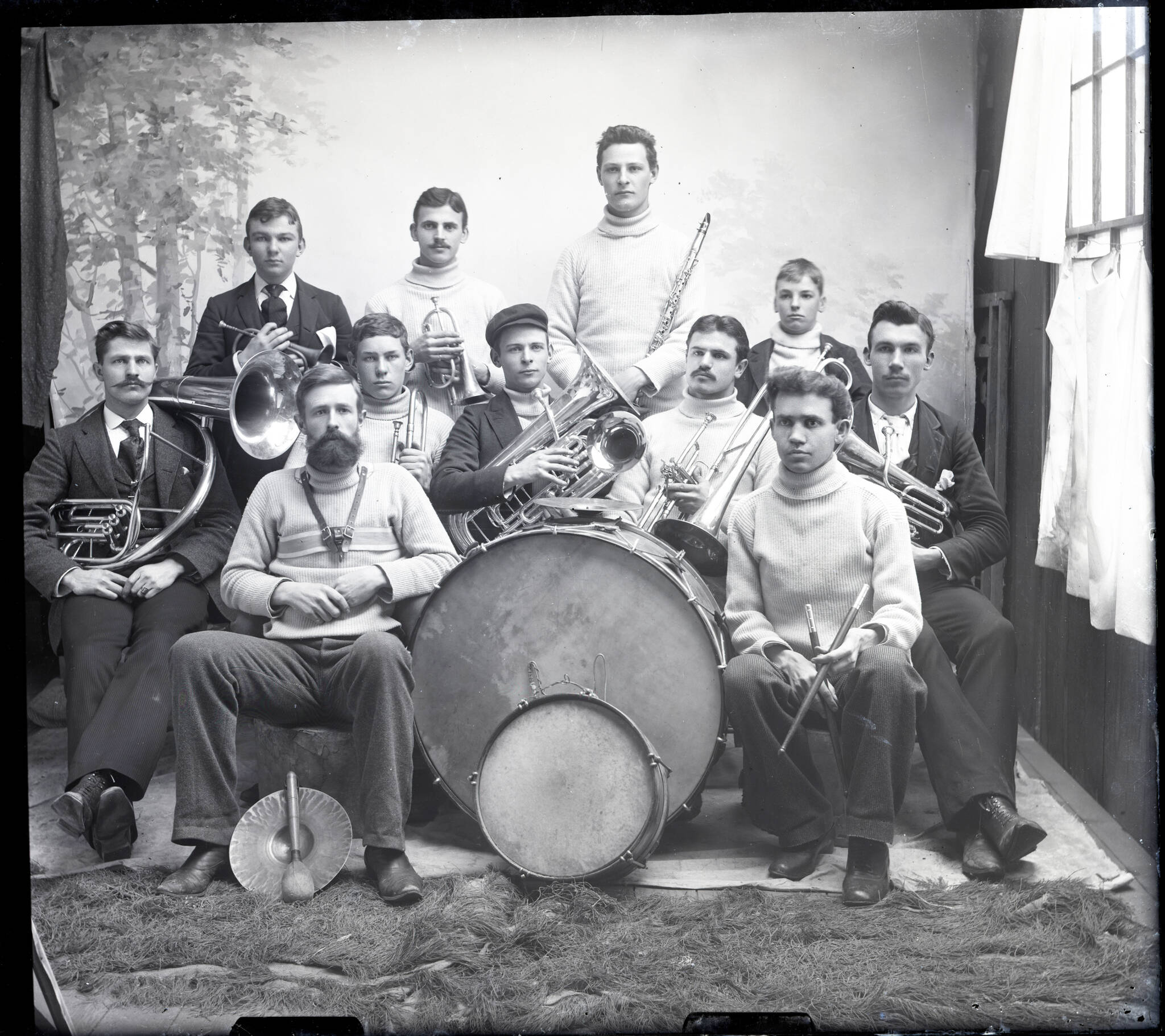
People in Port Angeles accepted this nickname and use of it grew. Instead of the fire department, Port Angeles had the Gate City Hook and Ladder Company. There was also the Gate City Cornet Band, which grew into the Gate City Band.
Among others, we also had the Gate City Hose Company, the Gate City Machine Shop and the Gate City Grocery. One organization was The Knights of Pythias of Gate City No. 65.
City promoters also wanted Port Angeles to become the commercial center of the West Coast. With the nickname came many promotions expounding on our great resources, population growth and investment opportunities. It was further claimed that Port Angeles would become the western terminus for the railroad companies. Of course, everyone was advised that they should hurry before the opportunity was gone.
Port Angeles was promoted as the place to build a home or start a business. One claim stated, “There has never been a single individual in Port Angeles, or elsewhere, who carefully studied the situation, but who predicted that right here will be builded [sic] a magnificent city in the very near future. Nothing can prevent it! Nothing can stop it! It is one of the things which the great laws of necessity will govern.”
In 1892, it was claimed that Port Angeles was “a city of from four to five thousand souls, and still they come every day in great steamer loads!”
Another claim was, “Look out for us-we give warning-we are on the high-road to prosperity and bound for the verdict-the Great Metropolis of the Northwest.”
Grandiose ideas can lead to severe disappointments. For many, their investment in land was sight unseen. It really was a time of buyer beware.
The following story has been told and retold within my family. It was a glorious day in Port Angeles when the passenger steamer arrived from Victoria. A man, who was a vice president of the Bank of England, stepped off the boat. He had seen and believed all the opportunities awaiting investors in Port Angeles. He met D. W. Morse on the dock and stated he had purchased certain lots of land. Morse pointed to the end of the dock and told him his lots were about 200 feet beyond the end of the dock. In other words, he had purchased water. The vice president reboarded the steamer and returned to Victoria.
Most of our glorious dreams were about to vanish. In February 1893, an economic depression engulfed the United States. Clallam County was not immune to it. Businesses failed. Unemployment skyrocketed. Cash money was in short supply. Our population dwindled as people sought jobs elsewhere.
Life was hard for those who remained in Port Angeles. The only money in town came from either the sale of cedar shingles or G.A.R. pension checks.
Yet Port Angeles survived the depression of 1893. Economic growth returned. But our vision became far less grandiose and far more realistic.
Today, Port Angeles is still the Gate City. The gate is open, welcoming newcomers and visitors alike.
________
John McNutt is a descendant of Clallam County pioneers and treasurer of the North Olympic History Center Board of Directors. He can be reached at woodrowsilly@gmail.com.
McNutt’s Clallam history column appears the first Saturday of every month.
