
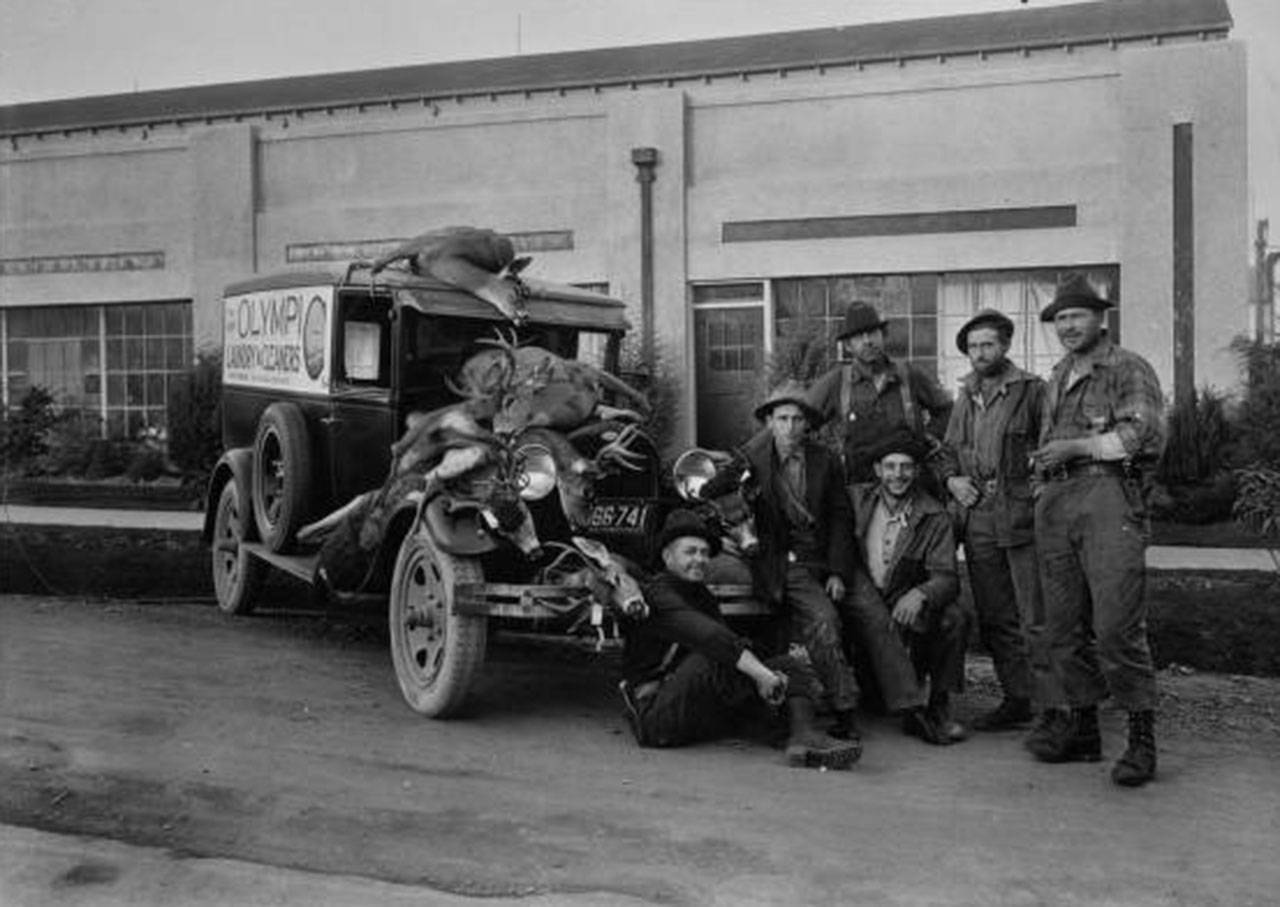
THERE HAVE BEEN laundries in this town since 1896, but the Olympic Laundry has been here since 1924.
According to a paper written by Anastasia White, Charles and Anastasia “Daisy” White left Idaho in 1924 looking for a laundry to purchase.
Charlie was looking for more hunting areas and more untouched wilderness.
They first stopped at Port Townsend but didn’t like the fog horn, so continued on to Port Angeles.
They purchased a small laundry from an old laundryman, James Wolley, who was old, sick and dying.
The workmen had just gone on strike and purchased their own cooperative laundry on Second and Peabody streets, but the Whites kept the business on Fourth and Lincoln.
It was a small building in the back of the barbershop and next to Angeles Cooperative Creamery.
Greg White related that laundries were generally built by a creek so the drain water from the washers could go into the creek.
Peabody Creek was the creek at the Fourth Street site.
At that time, Fourth Street was not a through street and terminated at the gulch west of Lincoln Street in front of the building.
The ungraded street was merely a narrow dirt road and was used exclusively by the laundry trucks.
A footbridge walk existed on the south side of the street connecting with Lincoln Street for the pedestrians.
Later on, the gulch was filled and the streets were finished.
White added the Olympic Dyeing and Cleaning Co. and in 1927 completed a new laundry building at the corner of Fifth and Lincoln streets.
A new oil burner was installed to operate the laundry, and a 65-foot chimney, built by T. H. Brown, was installed.
There was a recreation room above the offices in the front of the building built for his employees where they might rest and relax during their lunch breaks.
This new building, Greg White said, was the first earthquake-safe building on the West Coast.
This is the 94th year Olympic Laundry has been in business, and it is one of the oldest family-owned businesses in the area.
The building on Fourth Street was torn down and the area filled in to use for truck parking.
The senior Whites lived in a two-story house that was on the same lot as the laundry.
At the end of the 1950s, the house was moved to East Fifth Street to make room for laundry expansion.
Greg and his new wife, Consuelo, lived there.
Also on the laundry site was an old log cabin that was eventually moved to Lincoln Park.
In 1990, Greg tore down the old house and built a nice building for Consuelo to have a jewelry shop.
In 1927, a laundry truck established a route to the west end of the county, spending two days in the west and three days on the east end of the county.
Pingpong tournaments
During the depression in the 1930s, Greg White said the laundry held pingpong tournaments.
It was something to keep the employees busy during slack times.
During World War II, Olympic Laundry acquired the Forks Laundry and Port Townsend Laundry.
Eventually they were closed and their work brought to the Port Angeles site.
In 1948, Olympic Laundry went into the retail business with a complete line of garments, table linens, towels, dust mops and uniforms.
The Cooperative Laundry and Cleaners at Second and Peabody streets was purchased during World War II and, in 1958, a coin-operated laundry was established in the Smith Building at Sixth and Lincoln streets.
The coin-operated laundry was moved to Second and Peabody streets when the Smith Building was torn down in the 1970s.
Consuelo White remembered collecting coins from the laundromat.
In 1969, a laundry truck went to all points east of the floating bridge on Hood Canal daily, one truck went to Neah Bay and a third went to the Forks area daily.
In 2003, the old Seattle Steam boiler was replaced with a smaller, more efficient boiler, eliminating the need for the brick stack.
In 2005, the remainder of the old brick stack was taken down for safety concerns.
Malcolm White, son of Greg White, remembered many stories of the antics of Charlie and his friends.
He related that the old Hut Cafe has a creek bed under the building. Malcolm operates the laundry presently.
In reference to last month’s column, Sig Larson was spelled incorrectly. Also, he did not come to the area until the 1920s, so the year the fruit stand was built in is incorrect.
________
Alice Alexander is a Clallam County historian, author, and a descendent of an Elwha Valley pioneer family. She is a recipient of a 2014 Clallam County Heritage Award. She can be reached at bretches1942@gmail.com.
Alice’s Clallam history column appears the first Sunday of every month, alternating with Linnea Patrick’s Jefferson County history column on the third Sunday of the month.
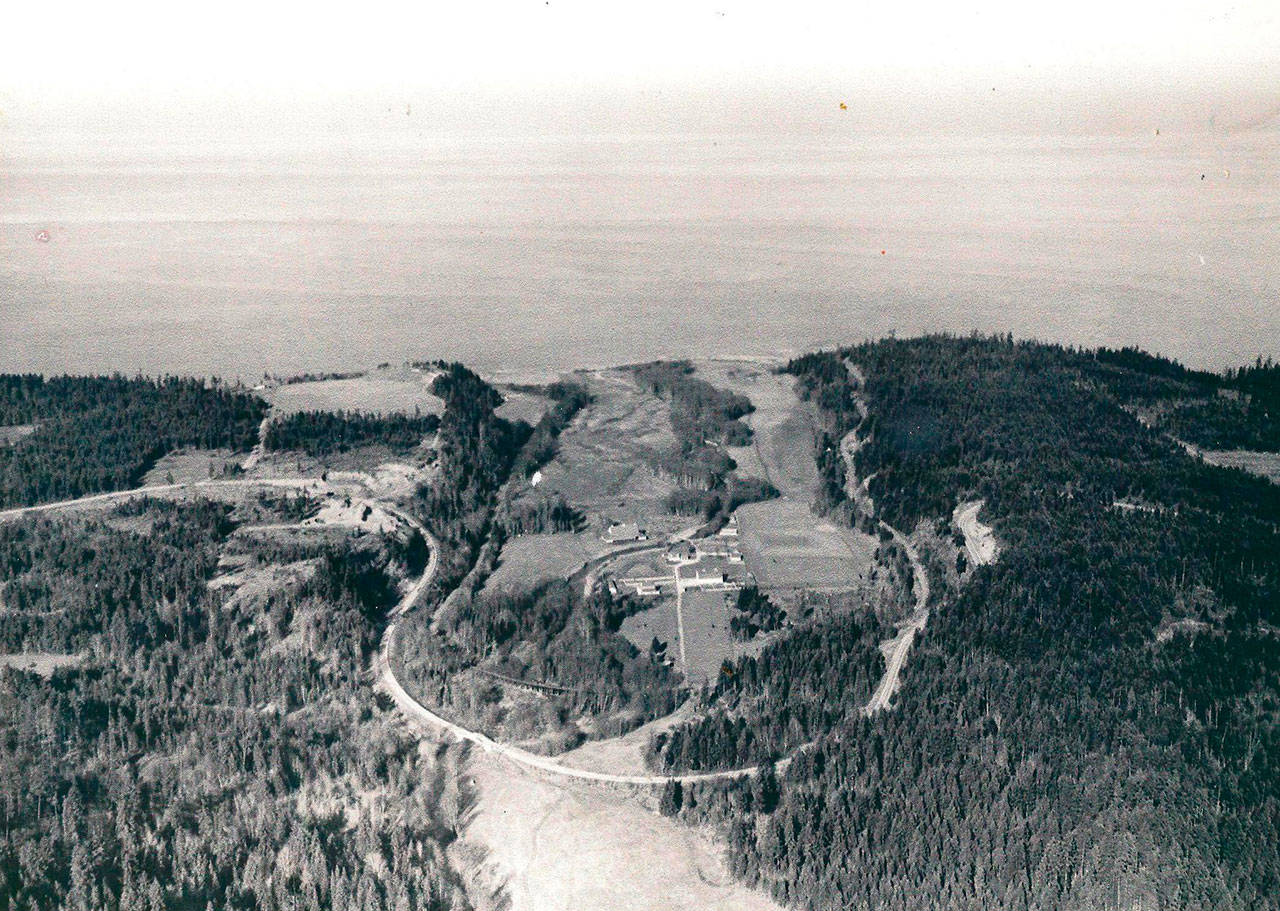
November picture from the past Where do you think this area is? Do you have guesses or memories? Write to Alice Alexander at 204 W. Fourth St., Apt. 14, Port Angeles, WA 98362, or email her at bretches1942@gmail.com and she will include your comments in her Dec. 3 column.
