
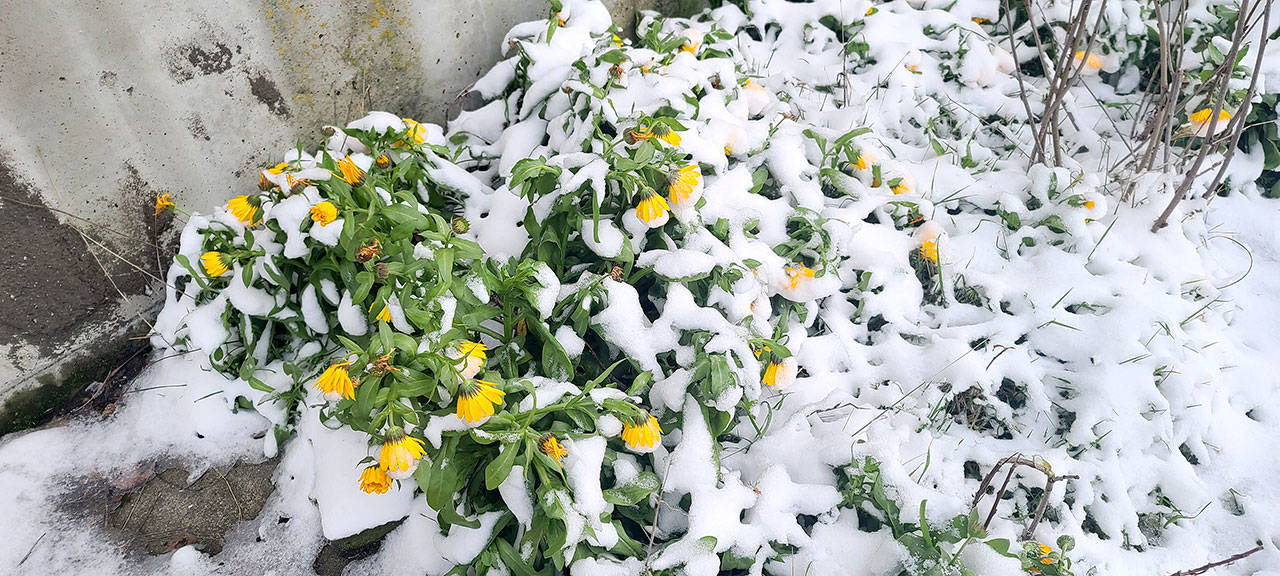
WELL, THAT DANG groundhog sure was a smart aleck varmint. It truly is still winter!
It was only this time last year we were under a “snowmageddon,” so without question, it is appropriate to repeat last year’s sage advice.
The snow and how we handle it can either be beneficial or a real nightmare for your plants.
From clean up pruning to cleaning up the driveway, all sorts of issues can arise and a savvy gardener needs to know what to do.
First, I want everyone to realize that this cold wintry weather is actually good for your plants and snow is a great insulator.
I have been concerned with how fast our gardens were progressing. Well, not anymore.
I need to be careful what I worry about because — wham!
A lot of folks, myself included, have been under snow, ice and frozen ponds for days.
People should be concerned about growth. Have persistent snow loads bent over and covered lovely ornamental plants?
So, what can one do? Plenty!
Wild animals, especially birds, are using a lot of energy and consequently need plenty of water as well as food to survive. If you have a feeding or watering station, you must break the ice and install one of many types of water hole heaters, or set out new water everyday.
If you have encouraged animals, fur and feather alike, to come to your yard through food, pond, suets or bird baths, you have a duty to keep supplies fully available, fresh and clean because you made them dependent on those supplies.
Let’s not forget the ice.
As ice forms, be careful what you add on top of it in an effort to melt the slippery stuff.
Salt can damage your nice, expensive cement pad or walkways.
It is not good for your plants either. It burns the roots.
Calcium chloride, or other de-icing products, work incredibly well.
Calcium products are actually beneficial to non-acid loving plants.
It is an alkaline product that sweetens the soil, which is beneficial to many plants and your lawn.
Sand is a wonderful material on ice. It also helps soil fertility and improves soil structure.
Next on the winter storm list are broken branches.
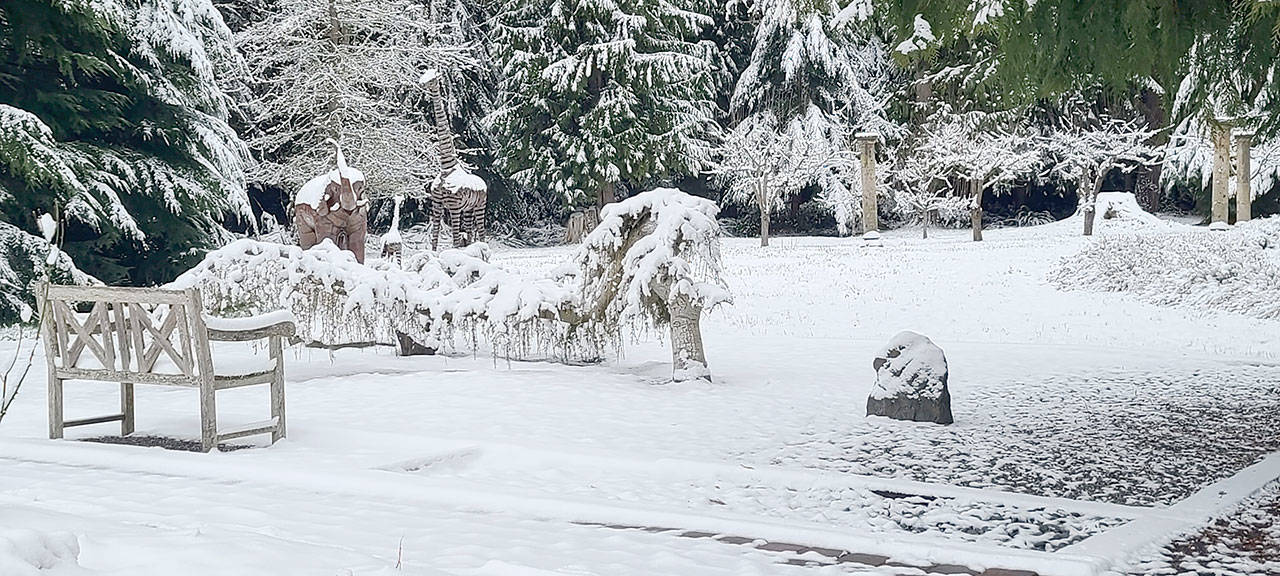
As storms come and go, be on guard for torn, cracked branches and properly prune them back.
Storm-broken plants are prime candidates for disease and insects because torn, shredded, sap-oozing wounds are the most ideal places for these problems.
Inspect the branches, stems and canes carefully, making sure your new clean-cut is below cracking or splitting that may have occurred.
Make the new cut just above a node you are heading off.
Many times, the best alternative is to thin the damaged limb.
Thinning is removing the entire branch or stem at the point of origin, or where it radiates off another branch or stem.
For many of you who live at higher elevations, plants are still covered in snow.
By now, the weight of the icy snow is bending, twisting or curling particular plants.
Many smart people go out after a snow storm, purposefully drive in stakes and tie off the branches that are bent to create nice, pendulous, contorted specimens that will grace the yard for years to come.
However, bent over rhododendrons are not in that category.
With the help of others, gently hold the plant and its branches, then carefully remove the snow.
Visualize how the snow will fall and remember smaller pieces of snow are gentler than bigger smacks of snow being cleared away.
Do not shake the plant and do not under any circumstances remove snow and ice when the temperature is below freezing.
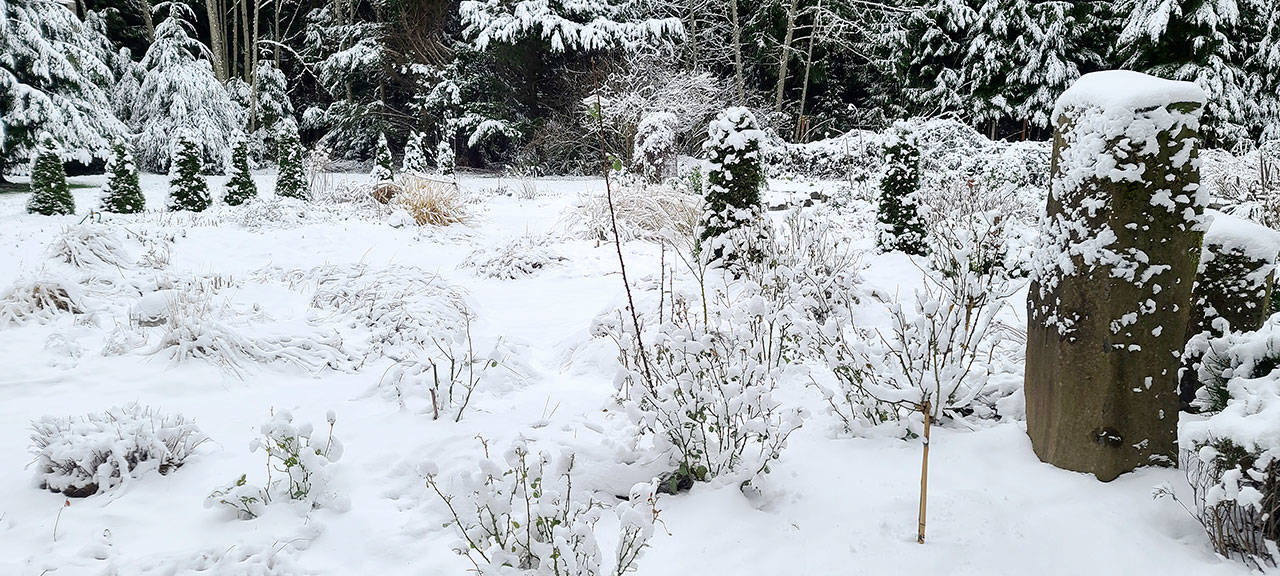
The lovely perennial gardens at Beth and Cappy’s will survive the snow and cold without harm because, as we have learned, they were “half” taken care of last fall and hence the cover left provides them the winter protection needed to take on our new winter blanket. (Andrew May/For Peninsula Daily News)
With that snow all over the place, here is some more advice perfect for great spring growth.
Now is the time to apply fertilizers, especially over the snow.
When lime or wood ash is sprinkled atop the snow, you get a great benefit.
Snow melts, products slowly seep into the ground, spreading the process availability.
And finally, think about any perennial bulbs that might be under snowy piles or debris.
So as the snow falls and gives way — take care of your prized and precious plants.
And do take care of yourselves — stay well all!
________
Andrew May is a freelance writer and ornamental horticulturist who dreams of having Clallam and Jefferson counties nationally recognized as “Flower Peninsula USA.” Send him questions c/o Peninsula Daily News, P.O. Box 1330, Port Angeles, WA 98362, or email news@peninsuladailynews.com (subject line: Andrew May).
